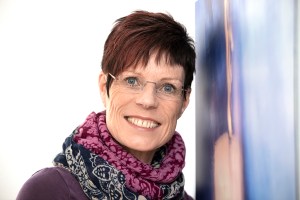
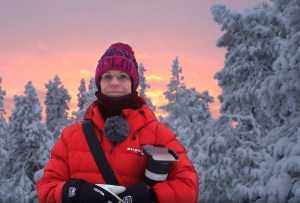
Kaisa Sirén lives in Rovaniemi, within the Arctic Circle of Finnish Lapland, where she works as a freelance photographer and artist.
She studied photojournalism in Canadabut moved back to Finland after her studies.
Her works are widely published in various Finnish magazines and newspapers, and she have had several solo and group exhibitions in Finland, Sweden, Denmark, Scotland, USA and Germany She is a photographic artist who makes the landscape of her soul visible with Intentional Camera Movement, using the northern landscapes of Finland as a backdrop. She focuses on themes related to the seasons of Lapland and the sensitivity of nature. She selects subjects from nature and transforms them into elements that were initially absent, thus visualizing the invisible. She is the co-founderof the ICM Photo Academy, where she teaches ICMphotography coursesboth in person and online.
Since 2017, she has run an art gallery called Villa Vinkkeli in her hometown.
Then she started to focus fully on ICM photography and making art. Kaisarealized she was invisible as a child, which led her to feel somewhat of an outsider even as an adult. ICMoffers a way to make invisible feelings and repressed emotions visible.
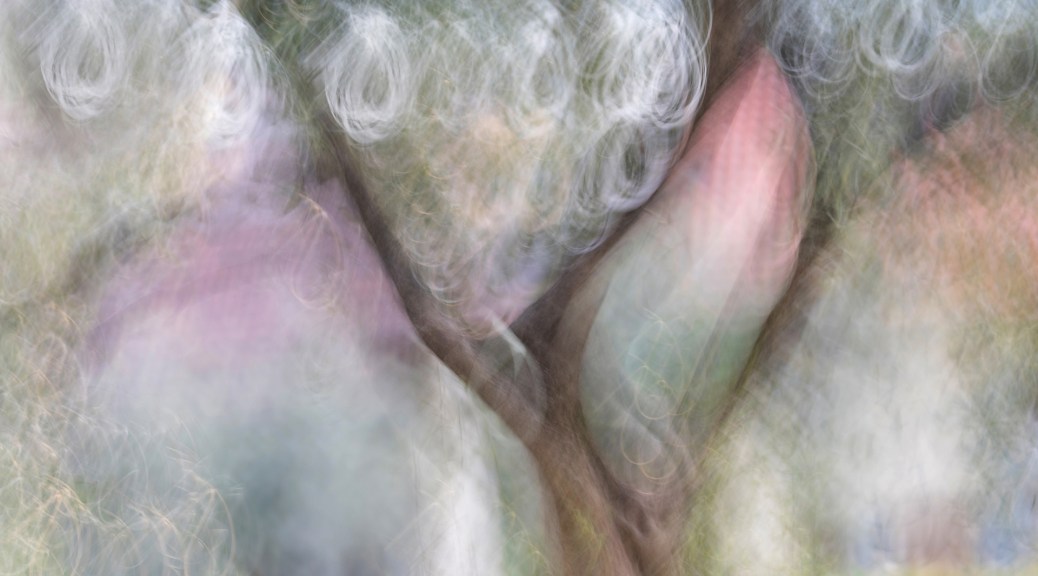
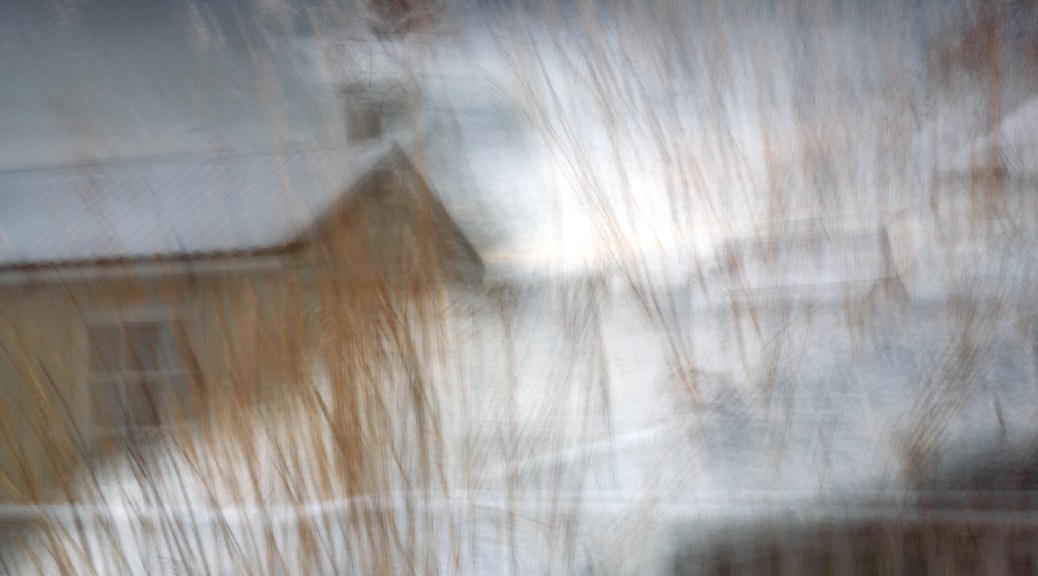
When taking a photo with ICM, the movement of the camera can create elements that weren’t initially present in the scene and bring hidden things to light.
It retains the same serendipity and element of surprise that have always accompanied her throughout her life.
These are some of the foundations of her art today. Intentional Camera Movement (ICM) is a playful, expressive approach to photography that invites the photographer to let go of strict representation and start creating images that feel as much as they show.
The technique behind ICMis to use a relatively long shutter speed, something like 0,5or1second to start with, and deliberately move the camera during the exposure.
The results vary depending on the time, the speed and size of the movement and the lens being used as well as many other factors. With time you can learn to control the movements and create intentional results but there is always an element of surprise involved
Kaisa Sirén e l’arte di rendere visibile l’invisibile
Kaisa Sirén vive a Rovaniemi, nel Circolo Polare Articodella Lapponia finlandese, dove lavora come fotografa e artista freelance.
Ha studiato fotogiornalismo in Canada, ma è tornata in Finlandia dopo gli studi.
Le sue opere sono ampiamente pubblicate su diverse riviste e giornali finlandesi e ha tenuto numerose mostre personali e collettivein Finlandia, Svezia, Danimarca, Scozia, Stati Uniti e Germania.
È un’artista della fotografia che rende visibile il paesaggio della sua anima attraverso un movimento intenzionale della fotocamera, utilizzando come sfondo i paesaggi settentrionali della Finlandia.
Si concentra su temi legati alle stagioni della Lapponia e alla sensibilità della natura. Sceglie soggetti dalla natura e li trasforma in elementi inizialmente assenti, visualizzando così l’invisibile.
È co-fondatrice dell’ICM Photo Academy, dove insegna corsi di fotografia ICM sia di persona che online.
Dal 2017 gestisce una galleria d’arte chiamataVilla Vinkkelinella sua città natale.
Successivamente ha iniziato a dedicarsi completamente alla fotografia ICMe alla creazione artistica. Kaisa si rese conto di essere invisibile fin da bambina, il che la portò a sentirsi in qualche modo un’emarginata anche da adulta.
L’ICM offre un modo per rendere visibili sentimenti invisibili ed emozioni represse.
Quando si scatta una foto con l’ICM, il movimento della fotocamera può creare elementi inizialmente non presenti nella scena e portare alla luce cose nascoste.
Mantiene la stessa serendipità e lo stesso elemento di sorpresa che l’hanno sempre accompagnata nel corso della sua vita.
Questi sono alcuni dei fondamenti della sua arteodierna. Il movimento intenzionale della fotocamera (ICM) è un approccio ludico ed espressivo alla fotografia che invita il fotografo ad abbandonare la rappresentazione rigida e a iniziare a creare immagini che trasmettano emozioni oltre che immagini.
La tecnica alla base dell’ICM consiste nell’utilizzare un tempo di posa relativamente lungo, ad esempio 0,5o 1secondo per iniziare, e muovere deliberatamente la fotocamera durante l’esposizione.
I risultati variano a seconda del tempo, della velocità e dell’ampiezza del movimento, dell’obiettivo utilizzato e di molti altri fattori.
Con il tempo si può imparare a controllare i movimenti e a creare risultati intenzionali, ma l’elemento sorpresa è sempre presente.
As a December girl polar night is my favourite time of the year. When November falls and the first snow covers the ground I am home! The short days mean that we go directly from sunrise to sunset and have the most stunning colors during those short hours of daylight. It is the time to go out with the camera
Kaisa Sirén – Polar Night
Kaisa Sirén – Polar Night
Kaisa Sirén – Polar Night
Kaisa Sirén – Polar Night
Kaisa Sirén – Polar Night
Kaisa Sirén – Polar Night
Kaisa Sirén – Polar Night
The Most Resilient
I have visited Antarctica three times and it is by far my favourite continent. and the favourite creature is the emperor pengune. They have chosen the most peculiar strategy for survival wintering in those harsh conditions while incubating the egg. They must be the most curious and the most resilient creatures of us all.
Kaisa Sirén – The Most Resilient
Kaisa Sirén – The Most Resilient
Kaisa Sirén – The Most Resilient
Kaisa Sirén – The Most Resilient
Kaisa Sirén – The Most Resilient
Kaisa Sirén – The Most Resilient
Kaisa Sirén – The Most Resilient
Pelican Brief
In January 2026 I travelled to northern Greece, to Lake Kerkini, with a single intention: to photograph Dalmatian pelicans. I had seen images of these immense, almost improbable birds and felt a growing pull to meet them in their winter gathering place. I did not go in search of landscape or light. I went for the birds – and to see what might happen when their movement met my camera moves.
Kaisa Sirén – Pelican Brief
Kaisa Sirén – Pelican Brief
Kaisa Sirén – Pelican Brief
Kaisa Sirén – Pelican Brief
Kaisa Sirén – Pelican Brief
Kaisa Sirén – Pelican Brief
Kaisa Sirén – Pelican Brief
Wood Wide Web
My series Wood Wide Web has been inspired by the book Hidden Life of Trees by Peter Wohlleben, (2016). In the book Wohlleben describes his studies and observations about the life of trees during his long career as a forester. He talks about the ability the trees have, to communicate, form communities, to alarm each other and take care of their offspring and elders. The observations may be difficult to prove scientifically and equally difficult to photograph. In my attempts to make the phenomena visual I use a technique called Intentional Camera Movement (ICM). It is a technique during which the camera is moved during a long exposure. Thanks to ICM the images may have elements, which bring unseen stories or actions visible. It may form layers to the images which make room to the imagination of the viewer. With this series I want to bring out the importance of trees to us humans as well as that they may be much more complex than we ever have thought. Wise old trees, they need our respect.
Kaisa Sirén – Wood Wide Web
Kaisa Sirén – Wood Wide Web
Kaisa Sirén – Wood Wide Web
Kaisa Sirén – Wood Wide Web
Kaisa Sirén – Wood Wide Web
Kaisa Sirén – Wood Wide Web
Kaisa Sirén – Wood Wide Web
Kaisa Sirén – Wood Wide Web
Iceberg Graveyard
I have always been drawn to the beauty the Arctic and Antarctic landscapes provide. This body of work illustrates vanishing ice of the polar regions initiated by climate change. The work is a collection of poetic abstractions, depicting the progression of global warming. The polar regions are more rapidly affected than many other areas on the globe. Unfortunately, the vastness of the problem is not yet well comprehended, due to lack of human habitation in those remote areas. These images are impressions of the beauty this world represents and the impending loss we face.
Kaisa Sirén – Iceberg Graveyard
Kaisa Sirén – Iceberg Graveyard
Kaisa Sirén – Iceberg Graveyard
Kaisa Sirén – Iceberg Graveyard
Kaisa Sirén – Iceberg Graveyard
Kaisa Sirén – Iceberg Graveyard
Kaisa Sirén – Iceberg Graveyard
Lost in Venice
In January 2025 I had a chance to participate in a photography workshop in Venice. Before departure I did some homework and set my goals what I want out of the workshop. I learnt about the work of a German painter Wolf Bertram Becker who had been painting Venice buildings in and impressionistic, almost ICM style. This was a great inspiration for me and gave me direct guidelines about what I would be looking for besides the iconic vistas in the city. The next images are of his painting which served as my inspiration.
Kaisa Sirén – Lost in Venice
Kaisa Sirén – Lost in Venice
Kaisa Sirén – Lost in Venice
Kaisa Sirén – Lost in Venice
Kaisa Sirén – Lost in Venice
Kaisa Sirén – Lost in Venice
Kaisa Sirén – Lost in Venice
Dancing My Nature
This has been an exciting project photographing dancers out in the nature during our 7 seasons in Lapland. With these images I want to celebrate the precious nature we have in the North and also bring hope that it will stay for the future generations. I hope that the dances will convey the special light and colours we have in different seasons.
Kaisa Sirén – Dancing My Nature
Kaisa Sirén – Dancing My Nature
Kaisa Sirén – Dancing My Nature
Kaisa Sirén – Dancing My Nature
Kaisa Sirén – Dancing My Nature
Kaisa Sirén – Dancing My Nature
Kaisa Sirén – Dancing My Nature
Dream
Earlier I slept well and had strong, colourful dreams. A long time ago, I suffered a burnout, lost my dreams and a good sleeping pattern. Now that my life is balanced again the dreams are slowly coming back. In this series I visualise the struggles, but yet how more light, harmony and colour has become more apparent in my life. And this has been achieved thru doing in life what I love.
Kaisa Sirén – Dream
Kaisa Sirén – Dream
Kaisa Sirén – Dream
Kaisa Sirén – Dream
Kaisa Sirén – Dream
Kaisa Sirén – Dream
Kaisa Sirén – Dream
Indian Flashes
These images are taken during my visit to India in 2018. It was a sudden unexpected journey as my nephew got married and I was invited to the wedding. I decided to not take it as a photography trip but rather just go and explore the colours and the feeling of the New Delhi streets as much as possible. It turned our to be a colour galore and just perfect for ICM. I did not take any traditional images which was also very liberating. I just concentrated on the wonderful colours of the Indian street and enjoyed the transformation I was able to create with ICM.
Kaisa Sirén – Indian Flashes
Kaisa Sirén – Indian Flashes
Kaisa Sirén – Indian Flashes
Kaisa Sirén – Indian Flashes
Kaisa Sirén – Indian Flashes
Kaisa Sirén – Indian Flashes
Kaisa Sirén – Indian Flashes
Rainforest People of Papua
One of my dreams became true in august 2025 as I was able to travel to Papua New Guinea and attend a local cultural festival, Sing-Sing of Mt Hagen. It is a country of more than 1000 tribes and 850 languages. They still lead a very traditional jungle life and collect food from the forests. The festival was a mixture of chaos, screaming, dancing, marching, singing and a kaleidoscope of colours. For three days I was able to observe, participate and answer to the countless smiles.
Winteris the longest season in Finland, lasting about 200 days in Laplandand 3-4 months in the southern part of the country.
Temperatures in the north of the country are usually below freezing for most of the winter, providing a sense of absolute peaceand crystal-clear air.
A fairytale landscape will unfold before your eyes, with abundant snow, frozen lakes, and the chance to admire the Northern Lights, the icing on the cake.
In Lapland, everything seems muffled, with the snow reflecting an almost unreal light, even illuminating the polar night.
The first snow of the season, “ Ensilumi” in Finnish, is always a very exciting moment, eagerly awaited by Finns, and its arrival, given the large size of Finland, which extends for over 1000 kilometers from north to south, can vary depending on where you are.
In Lapland, which lies mostly above the Arctic Circle, the first snow arrives as early as September, although I happened to encounter it many years ago in late June during the car transfer from IvaloAirport to Inari. Finlandis a wonderful country that I recommend visiting in any season, but if you want to see it at its most elegant and fascinating, choose winter!
Thinking about Finnish winter I had the idea to ask twelve incredibly talented Finnish artists to show us “ Suomen talvi “ through their eyes, and I must say, the result of this experiment is truly astonishing, as you’ll see
In the article, along with a brief introduction to the artist, you’ll find two paintings: the first is her “ Suomen talvi “ and the second is one of her favorites I invite you to visit their social media pages and websites to better understand their talent.
If you are interested in some of their works, the artists could reserve a small discountfor the readers of my Blog
To Satu Kekäläinen, Mari Knuuttila, Meria Q, Paula Mikkilä, Milla Piirainen, Taru Rouhiainen, Minna Scheinin, Saila Seppo, Kaisa Sirén, Maj Sjö, Martina Uthardt, Liisa Viima, I extend my heartfelt thanks for making my idea possible
Satu Kekäläinen
Satu Kekäläinen, she was born inHelsinki, but after living in various places acrossFinland, she currently lives in Lieto.
Ice is a sort of common threadthat has accompanied Satu throughout her life, but artistically it all began in 2015 when, needing to find strength and breathe fresh air, she immersed herself in the nature of nearby Lake Littoistenjärvi, and since it was winter, she began photographing with her camera the figures she saw in the lake ice.
You can see her works on her Instagramand Facebookpages and website
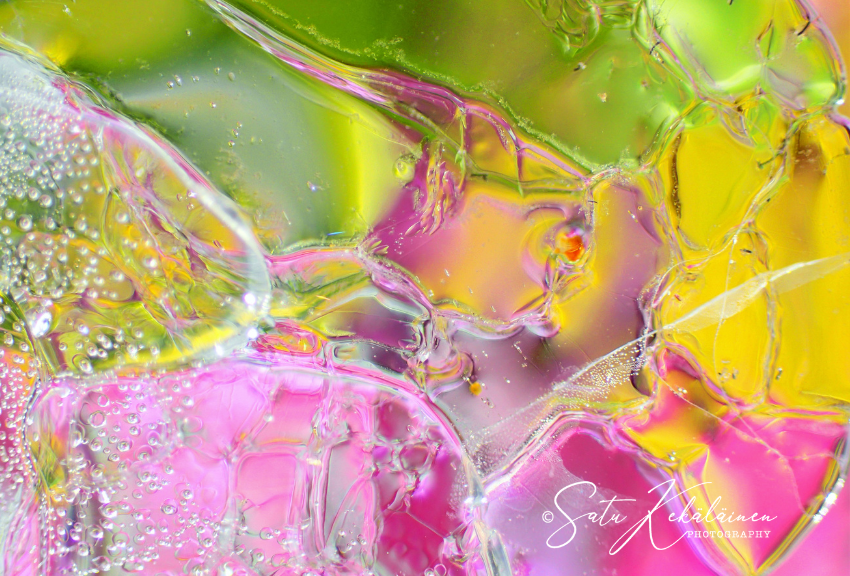
For Suomen talvi , she presents: Winter Fairy – aluminium print 30 × 40 cm edition 1/10 – photographed under a blue sky in the sunshine with a macro mirroring function from ice collected from Finnish winter nature
As a second works, she presents: The Soul of the Water – aluminium print 30 × 40 cm edition 1/10 – macro photography of ice collected from nature in winter in the colors and energies of blue anemones in spring
Sagastina – Winter Fairy
Sagastina – The Soul of the Water
Mari Knuuttila
Mari Knuuttila born in Lapua, a town located in Southern Ostrobothnia and where she currently lives and creates her works in her studio. Marihas been painting for about seven years, although her main profession is that of Chief Inspector at the State Administrative Agency, a role that requires strict compliance with laws and regulations.
Through painting, Mari has found a way to give free rein to her visual art, free from rules or pre-established patterns.
You can find more information about Marion her Instagramand Facebookpages andwebsite ForSuomen talvi she presents:Winter Silence – acrylic / mixed media on canvas 89 x 115 cm – this work captures the quiet strength of the Nordic winter – a frozen horizon where light and shadow meet in stillness. Layers of texture reflect frost, earth and the silent breath of the northern landscape. As a second paintingshe presents: With You – mixed media on canvas 80.5 x 65 cm – a layered field of ochre and shadow speaks of intimacy, memory and silent strength. The surface carries traces of time, emotion and the quiet power of being together. Both paintings are available for purchase on her website.
Mari Knuuttila – Winter Silence
Mari Knuuttila – With You
Meria Q aka Merja Sipiläinen-Kuhlberg
Merja Sipiläinen-Kuhlberg was born inArtjärvi (Lake of Artin english) but lives in Turku, a beautiful city on the west coast of Finland. Meria Q became interested in art as a young girl, sketching evening dresses in her notebooks, and she cultivated this interest as a teenager by designing fabric prints.
As often happens, life sometimes takes strange turns, andMeria Q, abandoning her passion for art, took a different direction that led her into the world of marketing and business.
However, in early 2010, her artistic creativity reawakened and has been unstoppable ever since.
She held her first solo exhibition in 2018, followed by numerous others.
You can find more information about Meria Q on her Instagram page and website For Suomen talvi she presents: First snow on the mountains –watercolour 19×14 cm, 2020 – this wonderful painting, which is a hymn to the joy of the first snow falling on the mountains, is part of the series that Merja Q has dedicated to Lapland. As a second paintingshe presents: Poppies – watercolour 28×38 cm, 2023 – these wonderful poppies are fragile red spots, which in the middle of a field can give the hearts of sensitive people incredible emotions. Both paintings are available for purchase on her website.
Meria Q – First snow on the mountains
Meria Q – Poppies
Paula Mikkilä
Paula Mikkilä born in Karvia, a hidden pearl of Finland surrounded by the wonderful rural landscapes of the Karvianjoki river, but resident in Tampere for over twenty years.
She graduated from the Department of Teacher Education at the University of Jyväskylä as a teacher specializing in fine arts and has dedicated a good part of her life to teaching as an elementary school teacher sharing much of her creative moments with children and teenagers.
In the 80s she created a considerable quantity of oil paintings, then after her move to Tampereshe devoted herself to bronze sculpture and for almost twenty years in the evenings after her school work she went to the foundry.
Working with bronze is not easy, but it’s incredibly rewarding, like the material itself, which, once transformed into a work of art, can convey incredible emotions. Pauladraws inspiration for her works from her surroundings: home, nature, animals, and people, who, once part of her creative process, tell stories and fairy tales that take on an imaginative life of their own.
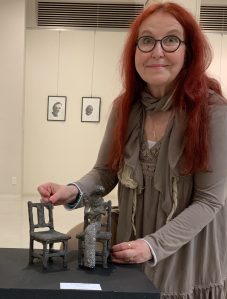
You can find more information about Paula on her Instagram page and website For Suomen talvi she presents: Two white spruces –acrylic, 40×40 cm, 2020 – this very beautiful painting is part of the series “Sheltered by the Forest” As a second workshe presents: Two spruces– bronze, 29/26/13 cm, 2018 – a beautiful bronze statue depicting two spruces Both works are available for purchase on her website.
Paula Mikkilä – Two white spruces
Paula Mikkilä – Two spruces, bronze
Milla Piirainen
Milla Piirainenis a Helsinki-based visual artist.
Her work is characterized by a versatile use of colors, materials, and techniques, through which she portrays human experiences and natural phenomena.
She works with acrylic, oil, and mixed mediaand primarily uses a palette knife, with which she has created her distinctive, layered, and vividly textured painting style.
Her works do not settle for a merely aesthetic impression but invite the viewer to explore deeper meanings and emotions that art can evoke.
She is primarily a marine painter, and the seais a subject she returns to again and again. Flowers are also part of her artistic expression. The interplay of the characteristic colors and forms of the sea and flowers offers her endless possibilities for creativity
You can find more information about Milla on her Instagram page and website For Suomen talvi she presents: Purpura – oil on canvas 82 x 92 cm (with frame) – in this stream flowing between snow-covered trees, Milla used shades of violet and purple to paint the shadows on the snow and the reflections in the icy water. At first glance, we are greeted by a magical atmosphere where light plays a fundamental role. A very beautiful painting! As a second paintingshe presents: Light– acrylic on canvas 70 x 60 diptych – This work is a treatise on light and shadow. While painting, she tell the viewer stories about the beauty that surrounds me. Light and shadow go hand in hand like lovers. This story is about love. Light, light. Both paintings are available for purchase on her website.
Milla Piirainen – Purpura
Milla Piirainen – Light
Taru Rouhiainen
Taru Rouhiainen born inHyvinkää but currently lives in Vantaa. Taru’s is one of those stories that shows us how not only painting, but art in general, can be the best medicine for overcoming difficult times.
In 2020, after the crisis,Taru found herself needing something that would allow her not only to stay busy but also to process and express her feelings.And so, making a life-changing choice, she enrolled in a painting course and fell in love with art!
Before discovering painting, she had always appreciated colors and, above all, their effect on our emotions, bringing joy into our homes.
You can find more information about Taru on her Instagram and Facebook pages and website For Suomen talvi she presents: White noise – mixed medium in canvas90×70 cm – in this abstract work Taru makes us understand how she loves to play with colors, layers and textures that make her work full of emotions, stories and energy. As a second painting she presents:Waterlilly –mixed medium on canvas 73×60 cm – this painting is part of the “Lummelampi” series and is inspired by the famous Water Lilies series by Monet, reinterpreting the theme with a material and contemporary style, depicting pink and white water lilies floating on a pond in blue and green tones, with bold brushstrokes that create a sense of movement of the water. Both paintings are available for purchase on her website.
Taru Rouhiainen- White noise
Taru Rouhiainen – Waterlilly
Minna Scheinin
Minna Scheinin was born in Turku, a beautiful city on the west coast of Finland, where she lived for a long time before moving toKaarina, where she currently lives. Minna often visitsItaly, where she has a home onLake Iseo, and she says this Italian experience has greatly influenced her artistic development.
She worked for many years as aforeign language teacher ( Swedish and English ) and was responsible for pedagogical development and online teaching at her University of applied sciences.
In 2011, she successfully completed a professional photography course at the New York Institute of Photography( online ) and in 2013, she earned a degree in editorial graphics.
Since then, her photographic work has transformed into an artistic journey where her creativity has finally found a way to express itself through her art. Minnaexpresses her art through photography, which plays a primary role, but also through painting and mosaics.
In photography, she began studying theICM( Intentional Camera Movement ) technique, which began a journey that led her to essentially paint with the camera, intentionally moving it during the exposure. Nature is her greatest source of inspiration, and the deepest essence of her images is the beauty that surrounds us and often goes unnoticed.
You can find more information about Minna’s artistic work on her Instagram page and these are her email addresses : scheinin.minna@gmail.comminna@scheinin.fi For Suomen talvi she presents: Winter night – acrylic painting, 42 x 29,7 cm – with this painting, Minna managed to recreate the magical atmosphere of a Finnish winter night and embellished the painting with small fragments of glass capable of giving it a natural brilliance typical of the wonderful polar night. As a second work she presents: Snowballs – photograph– with this very suggestive image Minna has captured a winter phenomenon in which small accumulations of snow or frost settle on the tips of common reeds (Phragmites australis) that emerge from partially frozen bodies of water with bright reflections created by the sun Both works are available for purchase on her website.
Minna Scheinin – Winter night
Minna Scheinin – Snowballs
Saila Seppo
Saila Seppowas born in Kouvola but moved to Sastamala at the age of 1 or 2.
She studied in Espoo and currently live in Helsinkifrom a long time.
She worked at theKemira factory in Pori and has worked and continues to work for the Research Council of Finland.
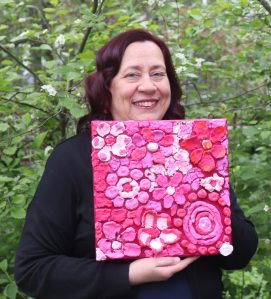
She is a member of the Helsinki Art Association, Espoo Art, and the Finnish Artists’ Association. Sailais undoubtedly a multifaceted artist, and for her, the most important thing in art is the ability to create a new, diverse, and colorful work of art. Sailaholds a PhD in chemistry and a degree in technology, and thanks to these studies, she has a deep understanding of materials and pigments. This offers her a wide range of artistic possibilities, which she translates into herworks, which closely resemble naive art, but in this case, I would saytechnological.
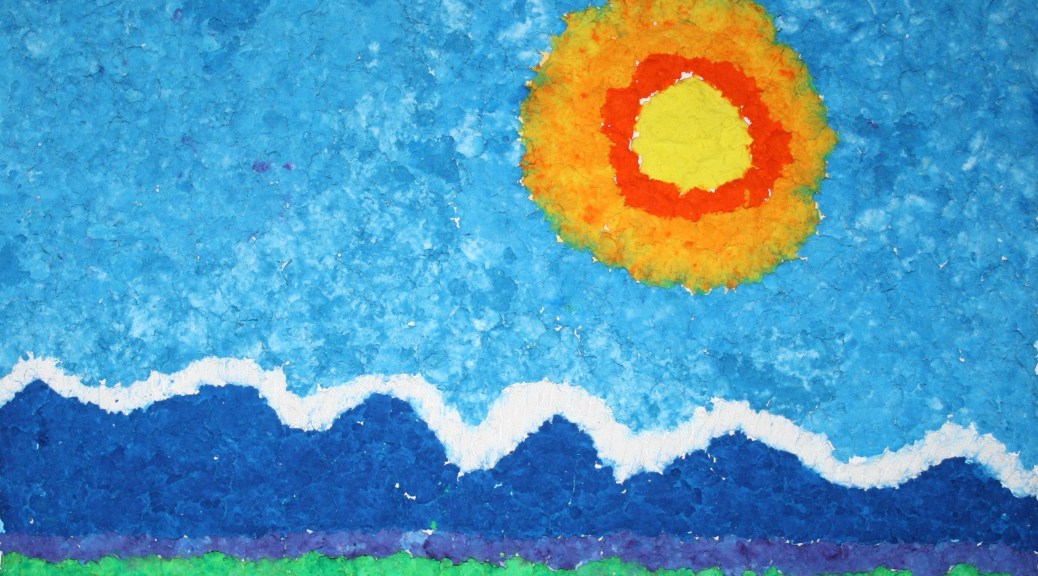
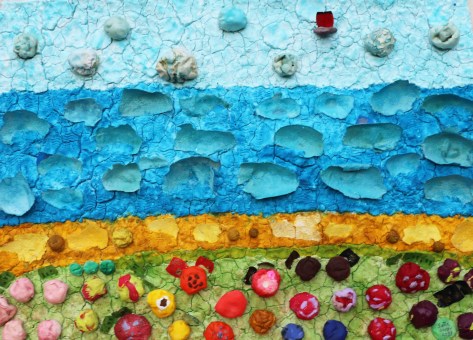
Thanks to her research, Sailacreated Sisusavi®, a material developed from natural ingredients that works well with all types of dyes, giving paintings a vivid surface and vibrant colors. Sisusavi®is a soft, water-based, moldable mass that can be colored with pigments or vegetable dyes and hardens at room temperature through water evaporation. Sisusavi®is a natural microcellulose material that contains no clay or plastic dyes, and the mass reproduces even the smallest details.
This product, entirely developed bySaila, is available for sale on Greenbutton.fi. More information about Sailacan be found on her social media pages, InstagramandFacebook, and on her website, sailaseppoart.fi, For Suomen talvi she presents: Snow – Sisusavi® and pigments on canvas, 47×55 cm – this large snow-covered tree, surrounded by a blanket of snow and kissed by the sun, has a naive, almost artisanal feel and the cracking effect due to the use of Sisusavi® makes it almost look like a material mosaic. As a second painting she presents:Flowers on Display – Sisusavi® and pigments on canvas, 40×59 cm – this work is part of the Sisusavi® project which stands out for its naive and material artistic style, characterised by a vibrant use of colour and three-dimensional textures that convey a sense of joy. Both paintings are available for purchase on her website.
Saila Seppo – Snow
Saila Seppo – Flowers on Display
Kaisa Sirén
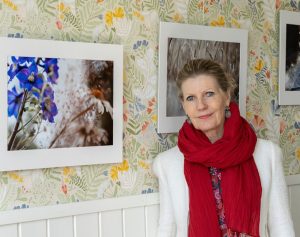
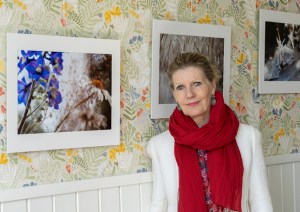
Kaisa Sirén lives in Rovaniemi, within the Arctic Circle of Finnish Lapland, where she works as a freelance photographer and artist.
She is a photographic artist who makes the landscape of her soul visible with Intentional Camera Movement, using the northern landscapes of Finlandas a backdrop.
She focuses on themes related to the seasons of Laplandand the delicacy of nature.
She selects subjects from nature and transforms them into elements that were initially absent, thus visualizing the invisible.
She is the co-founder of the ICM Photo Academy, where she teaches ICM photography courses both in person and online.
She has held several solo and group exhibitions in Finland, Sweden, Denmark, Scotland, the United States, and Germany, and since 2017, she has run an art gallery called Villa Vinkkeliin her hometown.
Her artistic focus is entirely on ICM photography and artistic creation. ICM offers a way to make invisible feelings and repressed emotions visible.
When taking a photo in ICM, camera movement can create elements that were initially absent in the scene, making invisible elements visible.
This technique possesses the same randomness and element of surprise that have always accompanied Kaisa throughout her life.
More information about Kaisacan be found on her social media pages, InstagramandFacebook, and on her website For Suomen talvi she presents: First Snow – acrylic painting, 2025, unframed 60x80cm – in this Arctic landscape, Kaisa captures the magical moment of the first snowfall covering the autumn vegetation. The contrast between the warm tones (red and pink) of the earth and the cold tones (blue and grey) of the sky is her stylistic signature, with which she seeks to make visible the “invisible” emotions and sensations of nature. Also noteworthy is the vegetation (the red and purple marks in the foreground) which are transformed into abstract shapes. As a second work she presents:Solitude – photograph, 2025, unframed 30x40cm – this beautiful photograph by Kaisa, where the minimalist aspect of the scene prevails, leads us to a reflection on solitude which is not necessarily a negative feeling but in this case a condition of deep connection with the wild nature of Lapland. Both works are available for purchase on her website.
Kaisa Siren – First snow, Ensilumi
Kaisa Siren – Solitude
MAJ SJÖ
Maj SJÖ, born in Helsinki, where she has a studio space in Kaapelitehdas, Finland’s largest cultural centre, but currently lives in Espoo where she also creates in her home studio.
When I first saw MaJ’sworks, I immediately understood how she managed to capture and convey in her art all those small and large miracles that life can give us day after day.
Her collection of works on the Archipelago and in general on everything that is sea or water (after all, her surname SJÖ in Swedish means lake/sea) can convey incredible emotions and for those like me who have experienced the magic that Hankocan convey, looking at her paintings that portray her means reliving moments of indescribable joy and serenity.
You can find more information about Maj on her Instagram and Facebook pages and website For Suomen talvi she presents: Winter Magic – oil on canvas, 2022, 100 x 80 cm – this painting features an ethereal, almost magical style, typical of Nordic illustrations, where snow and soft light create a suspended, enchanted atmosphere. The almost monochromatic choice, with a strong emphasis on white and elongated shadows (like that of the fox in the center), is a distinctive element that evokes the silence and solitude of Nordic winter landscapes. As a second painting she presents:What a Lady! – oil on canvas, 2023, 50 x 50 cm – in the background of this painting you can see a famous Helsinki landmark (Havis Amanda), which makes it very Finnish. Both paintings are available for purchase on her website.
Maj Sjo – What a Lady
Maj Sjo – Winter magic
Martina Uthardt
Martina Uthardt, born in Malax, where she currently lives in this big village and welcoming of about 5000 inhabitants in Southern Ostrobothnia, whereSwedishis spoken rather than Finnish (about 6% of Finns speak Swedish)
After a 10-year stint running a photography agency specializing in portraits, Martina has dedicated herself fully to painting professionally since 2021.
She has experimented with various techniques but currently prefers acrylic painting with its possibilities for layering and variations that make each painting alive and unique in different lights.
When I first saw Martina’s paintings, I was struck by how this artist was able to perfectly represent theFinlandI love so much.
You can find more information about Martina on herInstagramand Facebookpages and website For Suomen talvi she presents: Just Breathe – acrylic on canvas, 2021, 65 x 81 cm – this painting is intended to evoke a moment of pause and awareness, an invitation to slow down and take a breath of fresh air through the delicate pink and white tones contrasted by bold graphic lines. It is part of her abstract art collection, characterized by a style she herself defines as “mindful” allowing colors and shapes to play freely on the canvas. As a second painting she presents:Togetherness – acrylic on canvas, 2025, 100 x 81 cm – the painting depicts two swans swimming side by side under a large full moon in a Nordic landscape at night. The artist has described it as a “must-see” subject, conveying feelings of calm and beauty. The work explores the theme of connection and harmony, using swans as symbols of loyalty and enduring love. Both paintings are available for purchase on her website.
Martina Uthardt – Just breathe
Martina Uthardt – Togetherness
Liisa Viima
Liisa Viima, born in Ouluand currently based in Espoo.
Although she began painting as a teenager and dreamed of becoming a professional artist, she chose a more conventional path, earning a master’s degree in economics and dedicating herself to her family, including raising two daughters and caring for horse – her lifelong passion.
After facing significant life challenges, Liisa experienced a personal transformation that led her back to her original calling: painting.
Her mission became clear – to bring joy and beauty into the world through her art. Liisa’s style is contemporary and abstract, often infused with elements of realism, surrealism, and even whimsy.
Recurring themes in her work include humanity, love, and forgiveness, expressed through symbolic imagery such as faces, hearts, stars, hands, the moon, pigeons and also horses.
For Liisa, horses represent courage and nobility values that have guided her life and artistic journey.
You can find more information about Liisa on herInstagramandFacebookpages and website For Suomen talvi she presents: Mattitja– mixed media. Acrylic, oil, plaster reliefs, brick, mica pigment and epoxy, 2025, 90c90x4cm – from her Modern Icons collection – This painting explores the identity and deep awareness of being and includes some recurring symbols in the works of this artist, such as the dove (symbol of peace), the burning heart and floral motifs that evoke themes of spiritual awakening and love. As a second painting she presents:Ani Or – mixed media. Acrylic, oil, plaster reliefs, brick, mica pigment and epoxy, 2026, 90c90x4cm – from her Modern Icons collection – this painting features a central figure with a golden halo, surrounded by purple roses, a dove in her hand, and a pulsating red heart on her chest. Liisa’s style, characterized by an expressive use of color, bold textures, and the integration of symbolic and spiritual elements, truly emerges. Both paintings are available for purchase on her website.
Today I have the pleasure of introducing Finnish artistMinna Scheinin. She was born in Turku, a beautiful city on the west coast of Finland, where she lived for a long time before moving to Kaarina, where she currently lives. Minna often visits Italy, where she has a home on Lake Iseo, and she says this Italian experiencehas greatly influenced her artistic development.
She worked for many years as a foreign language teacher( Swedish and English ) and was responsible for pedagogical development and online teaching at her University of applied sciences.
She became interested in photography at an early age, thanks to her mother’s passion for photography; Mom took a lot of photographs and in doing so she passed on the same passion to her.
Her career and the growth of her family left little room for creativity and art, although the camera has always been a faithful friend to Minna.
The turning point came in the 2000s when she was able to take a gap yearfrom school to devote herself to studying photography.
In 2011, she successfully completed a professional photography courseat the New York Institute of Photography( online ) and in 2013, she earned a degree in editorial graphics. Since then, her photographic work has transformed into an artistic journey where her creativity has finally found a way to express itself through her art. Minna expresses her art through photography, which plays a primary role, but also through painting and mosaics.
She came to painting thanks to the evolution of her artistic mindset, which also led her to try her hand at painting after long thinking she couldn’t draw. From what can be seen in her works, abstract painting is for her a moment of experimentation in which to study contrasts and chromatic values, as well as shapes and compositions.
In photography, she began studying the ICM( Intentional Camera Movement ) technique, which began a journey that led her to essentially paint with the camera, intentionally moving it during the exposure.
While photojournalism requires an authentic and therefore sharp image, in the ICM technique, blurring is the element that allows the viewers to distance themselves from the real subject, leaving room for their own reflection and, consequently, a personal interpretation of the work they are observing. Minnaconsiders herself not only an omnivorous but, above all, passionate experimenter, and in her works she loves to create unique atmospheres, often very tranquil and permeated by a persistent and reflective atmosphere where colors, light, shadows, and contrasts play a primary role. Nature is her greatest source of inspiration, and the deepest essence of her images is the beauty that surrounds us and often goes unnoticed. However, she also embraces urban environments, where, with the ICM, she manages to capture moments and moods that allow the viewers to form their own personal interpretation.
For Minna, the starting point of her photographic art is to create an understanding of the simplicity and complexity of life.
On this fascinating topic, Minnasought inspiration in Voltaire’s Philosophical Dictionary, which revealed that many of life’s great questions have remained the same and unchanged for centuries: what are equality, vanity, morality? Minna then wondered if photography could be used to obtain answers to these questions, demonstrating that happiness does not come from matter, but from a good life, where things are in balance, both for better and for worse. But a good life doesn’t mean an easy or always happy life. All life also includes pain, worry, anxiety, sadness, anger, disappointment, and despair. They are the opposite of positive things, whose value is difficult to see or understand without this framework.
With her current photographic project created using ICM technology, Minna is trying to interpret all emotions from one extreme to the other, when the different extremes find a balance in everyday life, or not. Minna has held a number of private and group exhibitions, mainly in the Turku region, but also in Rovaniemi.
You can find more information about Minna’s artistic work on her Instagram page and these are her email addresses : scheinin.minna@gmail.comminna@scheinin.fi
Dalla Finlandia le emozioni visive dell’obiettivo di Minna Scheinin
Oggi ho il piacere di presentarvi l’artista finlandeseMinna Scheinin che è nata a Turku una splendida città sulla costa occidentale della Finlandia, qui ha vissuto a lungo prima di trasferirsi a Kaarinadove attualmente vive. Minnaviene spesso in Italiadove ha casa sul lago d’Iseo e questa sua frequentazione italianaa suo dire hamolto influenzato il suo percorso artistico.
Ha lavorato per molti anni come insegnante di lingue straniere ( svedese e inglese ), ed è stata responsabile dello sviluppo pedagogico nella sua Università di scienze applicate.
Ha iniziato ad interessarsi alla fotografia molto presto, grazie alla passione per la macchina fotografica della mamma che scattava molte fotografie e le ha fatto da apripista in quella che nel tempo diventerà una vera e propria attività artistica.
La sua carriera lavorativa e la crescita della sua famiglia non hanno lasciato molto spazio alla creatività e all’arte anche se la macchina fotografica per Minna è sempre stata un’amica fedele.
La svolta è avvenuta negli anni 2000 quando ha avuto la possibilità di prendersi un anno sabbatico dalla scuola per dedicarsi allo studio della fotografia.
Nel 2011 ha completato con successo un corso di fotografia professionale al New York Institute of Photography (online) e nel 2013 ha conseguito una laurea in grafica editoriale e da allora il suo lavoro fotografico si è trasformato in un percorso artistico dove la sua creatività ha finalmente trovato il modo di esprimersi attraverso la sua arte. Minna esprime la sua arte attraverso la fotografia che ha un ruolo primario ma anche con la pittura e i mosaici.
Alla pittura è arrivata grazie all’evoluzione della sua mentalità artistica che l’ha portata anche a cimentarsi con la pittura dopo aver pensato per lungo tempo di non saper disegnare e da quello che si può vedere attraverso le sue opere la pittura astratta è per lei un momento di sperimentazione in cui studiare i contrasti ed i valori cromatici così come per le forme e le composizioni.
Nella fotografia ha iniziato a studiare la tecnica ICM (Intentional Camera Movement)con la quale ha iniziato un percorso che l’ha portata in pratica a dipingere con la macchina fotografica muovendo intenzionalmente la fotocamera durante l’esposizione.
Se nel fotogiornalismo c’è la necessità di avere un’immagine autentica e quindi nitida nella tecnica ICMla sfocatura è l’elemento che consente al pubblico di allontanarsi dal soggetto reale per lasciare spazio alla propria riflessione e di conseguenza ad una interpretazione personale dell’opera che si sta osservando. Minnasi considera una sperimentatrice non solo onnivora ma soprattutto appassionata e nelle sue opere ama provare a creare atmosfere particolari, spesso molto tranquille e permeate da un’atmosfera persistente e riflessiva dove colori,luci,ombre e contrasti giocano un ruolo primario
La natura è la sua più grande fonte di ispirazione e l’essenza più profonda delle sue immagini è quella bellezza che ci circonda e che spesso passa inosservata, ma non disdegna però anche gli ambienti urbani dove con l’ICM riesce a rubare con il suo obiettivo momenti e stati d’animo in cui l’osservatore può arrivare ad una sua interpretazione personale.
Per Minna il punto di partenza della sua arte fotografica è creare una comprensione della semplicità e della complessità della vita.
Su questo tema appassionante Minna ha cercato la fonte nel Dizionario Filosofico di Voltaire, dal quale traspare che molti dei grandi interrogativi della vita sono rimasti gli stessi e immutati per secoli: cosa sono l’uguaglianza, la vanità, la moralità? Minnasi è quindi chiesta se la fotografia possa essere usata per ottenere risposte a queste domande, mostrando che la felicità non deriva dalla materia, ma da una buona vita, dove le cose sono in equilibrio, sia nel bene che nel male?
Ma una buona vita non significa una vita facile o sempre felice. Tutta la vita include anche dolori, preoccupazioni, ansia, tristezza, rabbia, delusioni, disperazione. Sono l’opposto delle cose positive, il cui valore è difficile da vedere o comprendere senza questa cornice.
Con il suo attuale progetto fotografico realizzato con la tecnica ICM, Minna sta provando a interpretare tutte le emozioni da un estremo all’altro, quando i diversi estremi trovano un equilibrio nella vita di tutti i giorni, oppure no. Minna ha realizzato un buon numero di mostre tra private e collettive, principalmente nella regione di Turku, ma anche a Rovaniemi.
Potete trovare maggiori informazioni sull’attività artistica di Minna sulla sua pagina Instagram e questi sono i suoi indirizzi email: scheinin.minna@gmail.com, minna@scheinin.fi
Photographs taken using ICM technique
Asunheinikossa – Minna Scheinin
Auringonlasku – Minna Scheinin
Morning – Minna Scheinin
Tikkumetsä – Minna Scheinin
Magic moment – Minna Scheinin
Myrskyn – Minna Scheinin
Aallot – Minna Scheinin
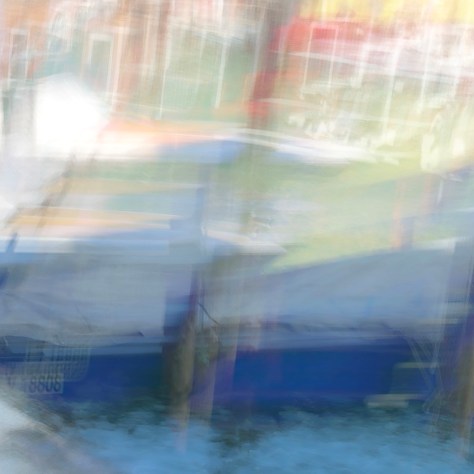
Blue Venice – Minna Scheinin
Venice – Minna Scheinin
Venice – Minna Scheinin
Venice – Minna Scheinin
Venice – Minna Scheinin
Burano – Minna Scheinin
Burano – Minna Scheinin
Butterflies – Minna Scheinin
Colours – Minna Scheinin
Happamia – Minna Scheinin
San Antonio – Minna Scheinin
Olive tree – Minna Scheinin
Mysteeripuu – Minna Scheinin
Olive tree – Minna Scheinin
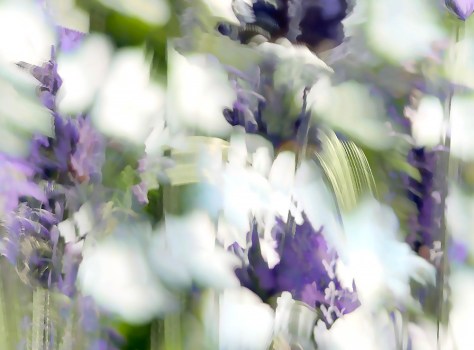
In the evening – Minna Scheinin
Lights – Minna Scheinin
Lights – Minna Scheinin
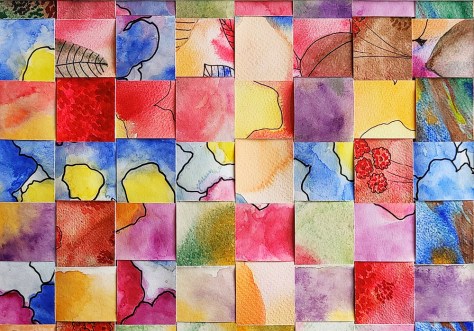
Watercolors
Hauskuutus – Minna Scheinin
Tivoli – Minna Scheinin
Vuorilla – Minna Scheinin
Iloinenaamu – Minna Scheinin
Kuutamo – Minna Scheinin
Tulppaanit – Minna Scheinin
Kuutamo 2 – Minna Scheinin
Riippuva_puutarha – Minna Scheinin
Vihreähetki – Minna Scheinin
Kaikki_kukat – Minna Scheinin
Vihreät_perus – Minna Scheinin
Kukkapelto – Minna Scheinin
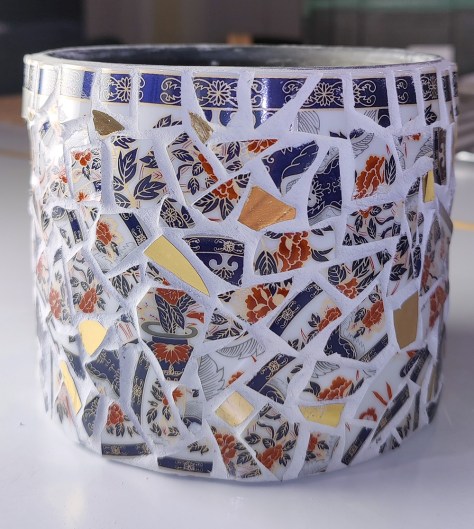
Mosaics
Geisha_suojaruukku – Minna Scheinin
Tivoli_suojaruukku – Minna Scheinin
Rannalla_suojaruukku – Minna Scheinin
Tivoli_tarjotin – Minna Scheinin
Planeetat_tarjotin – Minna Scheinin
Puutarhassa_tarjotin – Minna Scheinin
Puutarhassa 2_tarjotin- Minna Scheinin
Hedelmätarha_vati – Minna Scheinin
Greece – Minna Scheinin
Palmut – Minna Scheinin
Kalatarjotin – Minna Scheinin
Japan_suojaruukku – Minna Scheinin
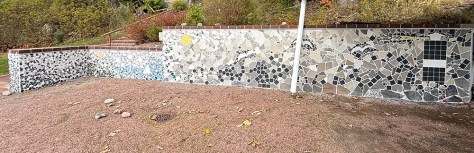
Mosaic Mural – Minna Scheinin
Minna and the ice
Minna Scheinin at work 2025
Ice – Minna Scheinin
Ice – Minna Scheinin
Ice – Minna Scheinin
Ice – Minna Scheinin
Ice – Minna Scheinin
Ice – Minna Scheinin
Minna Scheinin – Exhibitions
Minna Scheinin – Exhibitions
Minna Scheinin – Exhibitions
SOLO EXHIBITIONS 2024 Colours Matter – Colours Matter, Brinkhall Manor, Turku 2023 With Glass and Lenses, Waudevilla, Parainen 2018 Nature Pictures, Joutsen Medical Clinic, Loimaa 2017 Unreachable Stories – Encounters in Ecuador, Café Art, Turku 2012 Natura II: Galapagos – Fearless Islands, Pulssi Window Gallery, Humalistonkatu 9-11, Turku 2011 Natura I: Poetic Images of Nature, Turku University of Applied Sciences ICT Building
ENVIRONMENTAL ART 2025 Happiness, mosaic mural, 9m x 1.5m, Kaarina
GROUP EXHIBITIONS 2026 Imaginary Worlds, Mökkigalleria, Kaarina 2021 A House Full of Artists. In conjunction with the Konstrunda and Rovaniemi Week events. Rovaniemi 2017 Time – Nature as a mirror of time, Kuusisto Art Manor, Kaarina 2012 Periscope, Workshop series and exhibition organized in connection with the 20th anniversary of Turku photography education, Photo Centre Peri, Turku 2011 2000 & 11 self-portraits, Turku Capital of Culture project, Finnish Museum of Photography, Helsinki 2011 2000 & 11 self-portraits, Turku Capital of Culture project, Turku Art Academy Cable Car Gallery 2011 2000 & 11 self-portraits, Turku Capital of Culture project, Turku University of Applied Sciences language teachers’ self-portrait exhibition, Turku University of Applied Sciences ICT building premises
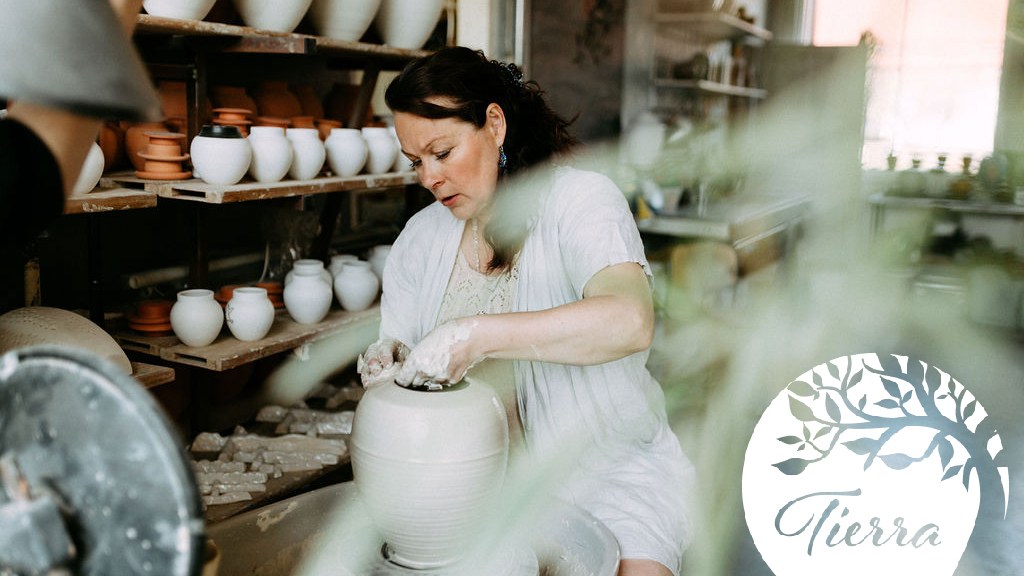
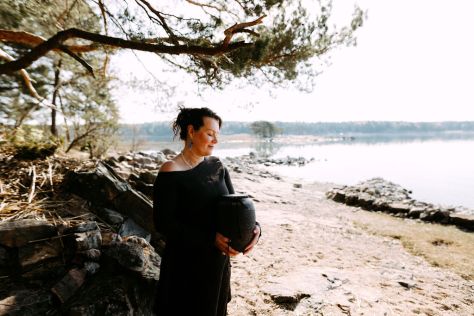
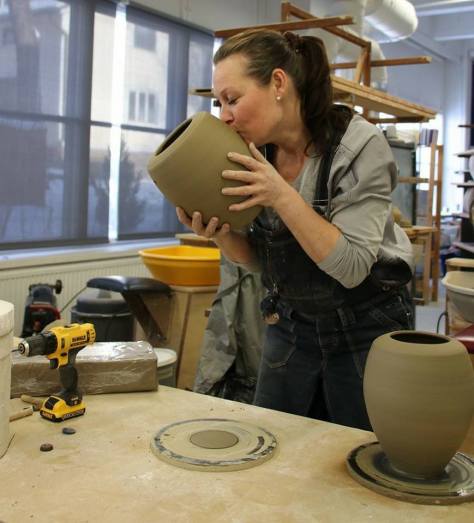
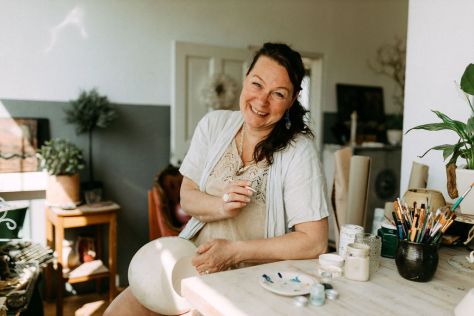
Today I have the pleasure of introducing Finnish artistPia Zettinig from Turku, where she was born and lives, working in her art studio, “Tierra Finlandia.” Pia is a visual artist with a strong, but I would say above all natural, ability to shape clay into forms that contain space for life, death, and the transitions in between.
Her practice ranges from public art to sculptural reliefs and ecological cremation urns: works that blend craftsmanship, ethics, and emotional intelligence.
Clay entered her life very early, having grown up surrounded by art since she was a child when she began modeling clay on her mother’s pottery wheel and spent time in the studio of Finnish master ceramistAbbe Kantor.
For Pia, clay was never just a material; rather, it became a language through which she connected with the world, reaching out to her inner self.
This connection has always accompanied her, even when life took her elsewhere.
Before dedicating herself fully to art, Pia studied healthcare and worked for over twenty years as a physiotherapist, therapist, and guide in various parts of the world, meeting people at their most vulnerable moments: on the margins of pain, illness, birth, loss, and transformation. This background has profoundly influenced her artistic approach.
Her works are not just objects, but genuine emotional encounters that exude the experience of a lifetime, where a human being is more than a body and life is much more than individual, measurable moments.
Life has taken Pia to Canada, the United States, and New Zealand, but it has also brought her profound loss and hardship, including a fire that destroyed her home and nearly all her material possessions.
Through these trials, Piahas come to understand that nothing is permanent, and that is precisely why everything matters. Pia’s life and work have grown in layers, just like the earth she shapes with her hands. Her path has never been linear or pre-planned, but rather has formed layer by layer through experiences, losses, encounters, and an inner calling that, at a certain point in her life, she could no longer ignore.
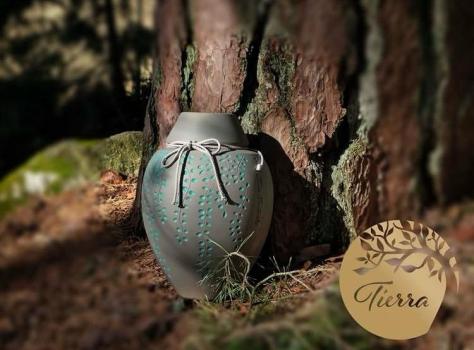
At the heart of Pia’sartistic practice is raw Finnish clay, completely biodegradable and returned to the natural cycle.
Whether creating large-scale public installations using ancient excavated soil or intimate hand-sculpted urns, Piaapproaches materials with profound respect because for her, ecology is not a trend or a marketing value but an ethical foundation: what is taken from the earth must be returned with care.
Urns entered Pia’slife not by design, but through seemingly random intersections (a moment in Italy, a call from an old ceramics teacher) that led her on a path where everything she had experienced and learned found its place.
Becoming an urn maker wasn’t a career choice; it was the answer to a calling. Pia doesn’t create urns as objects, but as gifts, each urn slowly crafted by hand and guided by intuition rather than biography, allowing form, symbol, and material to convey a meaning beyond words.
She uses raw Finnish clay, which is completely biodegradable and returns to the natural cycle, because clay and ash nourish the earth and sustain new life.
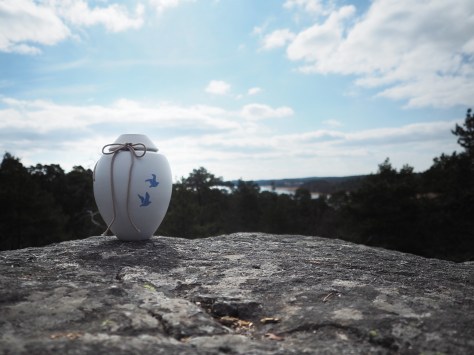
A personalized urn is born not from facts or biographies, but from what Pia has intuited after listening to an emotion or perceiving a recurring image that will guide the creation process, which can only be intimate and profoundly human. The urn encapsulates a life lived, love, and memories in a way that words can’t always capture.
For those grieving, the urn holds profound meaning because it’s often the first object they touch after a loss, and many speak of receiving more than they expected: comfort, peace, and the feeling that the bond isn’t over, but has changed shape.
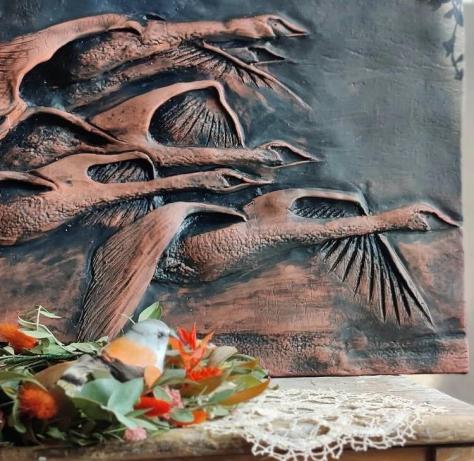
As an artist, Pia also works in public art, and her works literally emerge from the ground, like the reliefs created from millennia-old clay excavated beneath Turku’s Market Square. These works connect the city’s archaeological layers with the present moment and the movement of people. They are silent reminders of time, continuity, and the awareness that we are only one layer in a much longer journey. Pia’swork isn’t limited to an urn, a work of art, or a single moment, but lives on in people, in memories, and in the earth itself. Through clay, she makes visible what we often forget: that life is limited, incomplete, and imperfect, and therefore beautiful. That death is not the opposite of life, but part of it. And that love doesn’t disappear, but continues its journey. Pia’surns are internationally recognized for redefining how death can be approached: with dignity, beauty, and honesty. Piais also a death awareness advocate and a founding member and president of Pro Morte, an organization dedicated to reshaping the way societies talk about death, grief, and remembrance.
She firmly believes that the more courage we have in facing death, the more deeply we learn to live. As a mentor and guide, Piaopens clay to the living as well. In her workshops, clay becomes a tool for emotional expression, liberation, and the search for one’s inner voice.
You can find more information about Piaand her artistic work on her social media pages Instagram, Facebook, Linkedin, Youtube and on her website, tierrafinlandia.
Pia Zettinig con Tierra Finlandia plasma la vita attraverso l’argilla
Oggi ho il piacere di presentarvi l’artista finlandesePia Zettinigdi Turku, dove è nata e vive lavorando nel suo studio artistico “ Tierra Finlandia ”. Pia è un’artista visiva con una spiccata ma direi soprattutto naturale capacità di plasmare l’argilla in forme che contengono spazio per la vita, la morte e le transizioni intermedie.
La sua pratica spazia dall’arte pubblica ai rilievi scultorei e alle urne cinerarie ecologiche: opere che fondono artigianato, etica e intelligenza emotiva
L’argilla è entrata molto presto nella sua vita essendo cresciuta circondata dall’arte già da bambina quando ha iniziato a modellare l’argilla sul tornio della madre e ha trascorso del tempo nello studio del maestro ceramista finlandeseAbbe Kantor.
L’argilla per Pia non è mai stata solo un materiale, ma anzi è diventato un linguaggio con cui lei si è connessa con il mondo passando attraverso il suo io interiore.
Questa connessione l’ha sempre accompagnata, anche quando la vita l’ha portata altrove.
Prima di dedicarsi completamente all’arte, Pia ha studiato in ambito sanitario e ha lavorato per oltre vent’anni come fisioterapista, terapistae guida in diverse parti del mondo, incontrando persone nei loro momenti più vulnerabili: ai margini del dolore, della malattia, della nascita, della perdita e della trasformazione e questo background ha influenzato profondamente il suo approccio artistico.
Le sue opere non sono solo oggetti, ma veri e propri incontri emotivi che trasudano il vissuto di una vita intera, dove un essere umano è più di un corpo e la vita molto più di singoli momenti misurabili.
La vita ha portato Piain Canada, negli Stati Uniti e in Nuova Zelanda, ma le ha anche portato una profonda perdita e momenti brutti, tra cui un incendio che ha distrutto la sua casa e quasi tutti i beni materiali.
Attraverso queste prove che le ha riservato la vita, Pia ha compreso che nulla è permanente e proprio per questo tutto conta.
La vita e il lavoro di Piasono cresciuti a strati, proprio come la terra che plasma con le sue mani e il suo percorso non è mai stato lineare o pianificato in precedenza, ma al contrario si è formato strato dopo strato attraverso esperienze, perdite, incontri e una chiamata interiore che a un certo punto della sua vita non ha più potuto ignorare.
Al centro dell’attività artistica di Pia c’è l’argilla finlandese cruda, completamente biodegradabile e restituita al ciclo naturale.
Che si tratti di realizzare installazioni pubbliche su larga scala con antichi terreni di scavo o di urne intime modellate a mano, Pia si avvicina ai materiali con profondo rispetto perché per lei l’ecologia non è una tendenza o un valore di marketing ma è un fondamento etico, ciò che viene preso dalla terra deve essere restituito con cura.
Le urne sono entrate nella vita di Pia non in modo pianificato, ma grazie a quegli incroci apparentemente casuali della vita ( un momento in Italia, la chiamata di un vecchio insegnante di ceramica ) che l’hanno condotta su un percorso in cui tutto ciò che aveva vissuto e imparato ha trovato il suo posto.
Diventare una creatrice di urne non è stata una scelta di carriera, è stata la risposta a una vocazione. Pianon crea urne come oggetti, ma modella dei doni, dove ogni urna è realizzata lentamente a mano e guidata dall’intuizione piuttosto che dalla biografia, consentendo a forma, simbolo e materiale di trasmettere un significato che va oltre le parole.
Utilizza argilla finlandese cruda, completamente biodegradabile e che ritorna al ciclo naturale, perché argilla e ceneri nutrono la terra e sostengono nuova vita.
Un’urna personalizzata non nasce da fatti o biografie, ma da quello che Piaha intuito dopo aver ascoltato un’emozione o percepito un’immagine ricorrente che guideranno il processo della lavorazione che non potrà che essere intimo e profondamente umano. L’urna racchiude una vita vissuta, amore e ricordi in una forma che le parole non sempre riescono a raggiungere.
Per chi soffre, l’urna ha un significato profondo perché è spesso il primo oggetto che tocca dopo una perdita e molti parlano di aver ricevuto più di quanto si aspettassero: conforto, pace e la sensazione che il legame non sia finito, ma abbia cambiato forma.
Come artista, Pia lavora anche nell’arte pubblica e le sue opere nascono letteralmente dal terreno, come i rilievi creati con l’argilla millenaria scavata sotto la Piazza del Mercato di Turku. Queste opere collegano gli strati archeologici della città con il momento presente e il movimento delle persone. Sono silenziosi promemoria del tempo, della continuità e della consapevolezza che siamo solo uno strato in un viaggio molto più lungo.
Il lavoro di Pia non si esaurisce in un’urna, un’opera d’arte o un momento, ma vive nelle persone, nei ricordi e nella terra stessa, perché attraverso l’argilla, rende visibile ciò che spesso dimentichiamo: che la vita è limitata, incompiuta e imperfetta, e quindi bella. Che la morte non è l’opposto della vita, ma parte di essa. E che l’amore non scompare, ma continua il suo viaggio.
Le urne funerarie di Pia sono riconosciute a livello internazionale per aver ridefinito il modo in cui la morte può essere affrontata: con dignità, bellezza e onestà. Pia è anche una sostenitrice della consapevolezza della morte e membro fondatore e Presidente dell’associazione Pro Morte, un’organizzazione dedicata a rimodellare il modo in cui le società parlano di morte, dolore e ricordo.
Lei crede fermamente che più coraggio abbiamo nell’affrontare la morte, più profondamente impariamo a vivere e come mentore e guida Pia apre l’argilla anche ai vivi e nei suoi workshop, l’argilla diventa uno strumento per l’espressione emotiva, la liberazione e la ricerca della propria voce interiore.
Troverete maggiori informazioni su Piae la sua attività artistica sulle sue pagine social Instagram, Facebook, Linkedin, Youtube e sul suo sito tierrafinlandia
Builder: Man who build for calling ( buildersbelt in the urn)
Kauri: The Strong one (hands holding black ball)
Roses: Wisdom of power (golden roses)
Golden helmet
Siika: Dreamer of a free spirit (Silver fish around the base)
Red Magic: World within ( Red urn covered with feathers and etc.)
Pia: Nature is my garden (little birds in nature)
Harkka: Traveller of the nature realms (ginko biloba leaves)
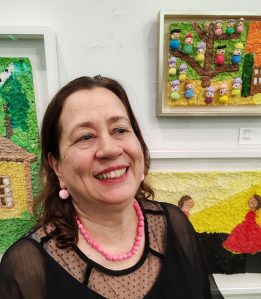
Today I have the pleasure of introducing Finnish artist Saila Seppo, she was born in Kouvola but moved to Sastamalaat the age of 1 or 2.
She studied in Espoo and currently live in Helsinki from a long time.
She worked at the Kemira factory in Pori and has worked and continues to work for the Research Council of Finland.
She is a member of the Helsinki Art Association, Espoo Art, and theFinnish Artists’ Association. Saila is undoubtedly a multifaceted artist, and for her, the most important thing in art is the ability to create a new, diverse, and colorful work of art. Daughter of a greengrocer, she began creating flower bouquets as a child, and thus understands the importance of colors and their combinations. Sailaholds a PhD in chemistry and a degree in technology, and thanks to these studies, she has a deep understanding of materials and pigments. This offers her a wide range of artistic possibilities, which she translates into her works, which closely resemble naive art, but in this case, I would saytechnological.
Curiosity has accompanied her throughout her life and has been a sort of common thread that has followed her on all her travels, which have seen her reach and visit 47 countries!
For Saila, experiencing cultural differences is enriching, and being constantly on the move can only fuel creativity towards generating new ideas and inventions.
Throughout her artistic journey, Saila has never remained in a comfort zone through her travels, but rather has continually challenged herself, creating well-rounded art and even publishing four books, with a fifth soon to be released.
In the past, she has presented her technological inventions to Marimekko’s head of design. Regretting that she didn’t have an open position as an artist, she encouraged her to organize an art exhibition, considering Saila’s works to be pure art.
And so it was, Saila followed the path indicated to her and began organizing several solo exhibitions with the aim of offering the public the opportunity to enjoy them.
The spark that starts the process of creating a new work has always been the most important moment, followed by the execution, which can take a long time but not always, and the gradual development of the idea, which must transform into an engaging work, capable of repeatedly attracting the viewer’s attention, repeatedly conveying important moods such as playfulness, joy, calm, nature, and unity.
Thanks to her research, Sailacreated Sisusavi®, a material developed from natural ingredients that works well with all types of dyes, giving paintings a vivid surface and vibrant colors. Sisusavi®is a soft, water-based, moldable mass that can be colored with pigments or vegetable dyes and hardens at room temperature through water evaporation. Sisusavi®is a natural microcellulose material that contains no clay or plastic dyes, and the mass reproduces even the smallest details.
This product, entirely developed by Saila, is available for sale on Greenbutton.fi.
The paste is also used in watercolor art, and casein or glue can help the paste adhere to paper or fabric; Saila uses glue. Sailacollects wild plants and has cultivated marigolds, for example, to isolate their color in an aqueous solution, which is stored in bottles and used as a color in some of her works.
Speaking of curiosity, some of Saila’s paintings, in which she has used food coloring, become edible, much to the delight of children in particular.
More information about Sailacan be found on her social media pages, Instagramand Facebook, and on her website, sailaseppoart.fi, where you can also find her works for sale.
Saila Seppo quando l’arte naif diventa tecnologica attraverso un’esplosione di colori che trasmettono gioia
Oggi ho il piacere di presentarvi l’artista finlandeseSaila Seppo che è nata a Kouvola, ma si è trasferita a Sastamala all’età di 1-2 anni, ha studiato a Espoo e vive da molto a Helsinki.
Ha lavorato nello stabilimento dell’azienda Kemira a Porie ha lavorato e lavora tuttora per il Consiglio di ricerca della Finlandia.
E’ membro dell’Helsinki Art Association, dell’Espoo Art e dell’Associazione degli Artisti Finlandesi. Sailaè sicuramente un’artista poliedrica e per lei quello che più conta nell’arte è il saper creare un’opera d’arte nuova, diversa e colorata. Figlia di un ortolano ha iniziato a creare bouquet di fiori fin da bambina e quindi ha ben chiara l’importanza dei colori e del loro abbinamento. Saila ha conseguito un dottorato in chimica e una laurea in tecnologia e grazie a questi suoi studi conosce molto bene materiali e pigmenti fatto questo che le offre un ventaglio non indifferente di possibilità artistiche che trasferisce nelle sue opere che ricordano molto da vicino l’arte naif ma in questo caso direi tecnologica.
La curiosità l’ha accompagnata per tutta la vita ed è stata una sorta di fil rouge che l’ha seguita in tutti i suoi viaggi con i quali ha raggiunto e visitato ben 47 paesi!
Per Sailavivere le differenze culturali è qualcosa che arricchisce e l’essere sempre in movimento non può che alimentare la creatività verso la generazione di nuove idee e invenzioni.
Durante il suo percorso artistico Saila grazie ai suoi viaggi non è mai rimasta in una zona confort ma al contrario si è messa continuamente alla prova creando arte a tutto tondo e arrivando anche a pubblicare quattro libri, mentre un quinto è in uscita.
In passato ha presentato le sue invenzioni tecnologiche alla responsabile del design di Marimekkoche rammaricandosi di non avere una posizione aperta come artista l’ha incoraggiata a organizzare una mostra d’arte, considerando i lavori di Saila a tutti gli effetti arte pura.
E così è stato, Saila ha seguito la strada che le è stata indicata è ha iniziato ad allestire diverse mostre personali con l’intento di poter dare la possibilità al pubblico di godersele
Da sempre la scintilla che dà inizio al processo di creazione di una nuova opera è il momento più importante a cui seguono l’esecuzione che può richiedere molto tempo, ma non sempre e lo sviluppo graduale dell’idea che deve trasformarsi in un opera coinvolgente, capace di attirare più volte l’attenzione dell’osservatore trasferendogli a più riprese stati d’animo importanti quali giocosità, gioia, calma, natura e unione.
Grazie ai suoi studi Saila ha creato Sisusavi®, un materiale che ha sviluppato a partire da ingredienti naturali e che funziona bene con tutti i tipi di coloranti conferendo al dipinto una superficie vivida e con colori che appaiono brillanti. Sisusavi® è una massa morbida, a base d’acqua e modellabile, che può essere colorata con pigmenti o coloranti vegetali e che indurisce a temperatura ambiente con l’evaporazione dell’acqua. Sisusavi® è un materiale naturale, micro cellulosa e non contiene argilla o plastica coloranti e la massa riproduce anche i più piccoli dettagli.
Questo prodotto interamente sviluppato da Saila è in vendita su Greenbutton.fi
La massa viene utilizzata anche nell’arte dell’acquerello e la caseina o la colla possono aiutare la massa ad aderire alla carta o al tessuto, Saila usa la colla.
Saila raccoglie piante selvatiche e ha coltivato ad esempio la calendula per isolarne il colore in una soluzione acquosa conservata in bottiglie e utilizzata come colore in alcune sue opere.
a proposito di curiosità, certi dipinti di Saila in cui ha utilizzato coloranti alimentari diventano commestibili per la gioia soprattutto dei bambini.
Maggiori informazioni su Sailasi possono trovare sulle sue pagine social InstagrameFacebook e sul suo sito web sailaseppoart.fi dove troverete anche le sue opere in vendita.
Paintings
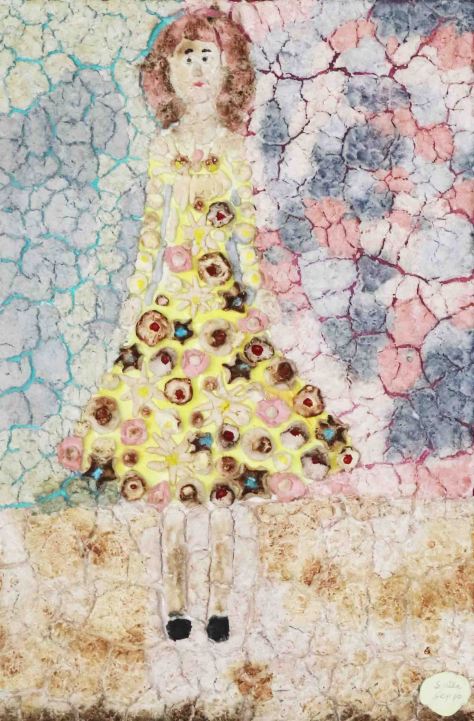
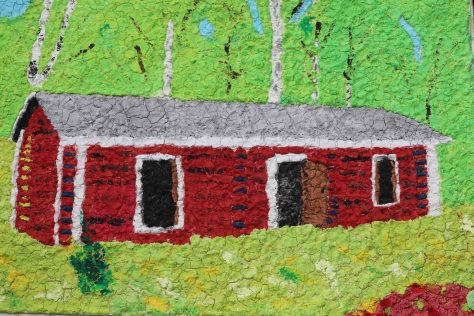
Saila Seppo – Our SunSaila Seppo – Floral DressSaila Seppo – House of RomanceSaila Seppo – Clouds, Flowers and the shimmering sea
Sculptures
Photographs
Next Exhibitions 2026
31.1. – 5.2.2026 Finland in Tokyo Design Festa Gallery in Tokyo 2.3. – 23.3. 2026 Espoo Artin 50-vuotisjuhlanäyttely Kaapelitehdas Puristamo, Helsinki 14.3. – 2.4. 2026 Lintutarha Galleria Art Frida, Korkeavuorenkatu 25, Helsinki 2.9. – 6.9. 2026 Habitare Messukeskus, Helsinki
The Finnish artist I’m introducing to you today is Satu Kekäläinen, she was born in Helsinki, but after living in various places across Finland, she currently lives in Lieto.
In Finnish, the name Satu meansfairy tale, and the one I’m about to tell you begins with… once upon a time, there was a little girl who, at the age of two, became seriously ill with pneumonia, resulting in antibiotic poisoning.
This little girl was saved from certain death thanks to ice therapy which allowed her temperature to drop to normal values from over 40 degrees to which it had reached.
Today that little girl is a woman who, despite various vicissitudes, including the loss of her voice ( due to poor air quality at her workplace where she was an audionom ), which she later recovered thanks to contact with nature and the ice, has fulfilled herself artistically by offering wonderful photos taken through the ice on her website Sagastina.
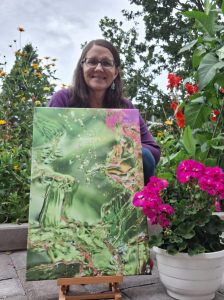
Ice is a sort of common thread that has accompanied Satu throughout her life, but artistically it all began in 2015 when, needing to find strength and breathe fresh air, she immersed herself in the nature of nearby Lake Littoistenjärvi, and since it was winter, she began photographing with her camera the figures she saw in the lake ice.
From this first photographic experience was born the photographic book“ Fosforikeiju ”with beautiful images of the lake ice.
Her passion for photography grew, and with her last salary before leaving her job as an audionom, she bought a new camera with macro functions and mirror so she could create symmetrical and imaginative images of ice, not only in winter but also in summer, using natural ice stored in the freezer and used among the flowers. Satu has always had an artistic streak within her since she was a child and her maternal grandmother encouraged her to cultivate it and so Satu held her first fashion shows of handcrafted clothes having as spectators the cows from her grandmother’s barn.
She attended the art school for children and teenagers in Turku, studied ceramics, sculpture, drawing and painting in the city boarding schools where her family lived and studied sculpture at the Turku Workers’ Schoolfor about 15 years and attended the Mynämäki College of Arts and Crafts Textile Artesaani.
Her primary profession remains that of an internal medicine and surgical nurse, audionom and currently works as a nurse on a rehabilitation assessment team in home care.
She held numerous solo exhibitions from 2016 to 2023 and took part in a good number of group exhibitions during the same period.
She published the book “ Fosforikeiju ” in 2017 and the card and therapy package Jään Lumous -Grace of Ice in 2020 ( 44 A6 format photo cards divided into 4 sets of 11 according to the elements of nature: air, fire, water and earth ).
In December 2016 she won the Invisible Disability Photo Contest of the Turku Committee of Kynnys Ry.
You can see her works on her social media pages and website, while to purchase her ice pictures you can contact her at her email address satusagastina@gmail.com
L’artista finlandese che vi presento oggi si chiama Satu Kekäläinen, nata a Helsinki ma dopo aver vissuto in diverse località della Finlandia attualmente vive a Lieto.
In finlandese il nome Satu vuol dire fiaba e quella che sto per raccontarvi inizia con… c’era una volta una bambina che all’età di due annisi ammalò gravemente di polmonite con una conseguente intossicazione da antibiotici.
Questa bambina fu salvata da morte sicura grazie ad una terapia a base di ghiaccio che consentì di far scendere la temperatura a valori normali dagli oltre 40 gradi a cui era arrivata.
Oggi quella bambina è una donna, che pur attraverso varie peripezie tra cui la perdita della voce ( per una scarsa qualità dell’aria nel luogo di lavoro dove era tecnico audionomo ) poi recuperata grazie al contatto con la natura e con il ghiaccio, si è realizzata artisticamente proponendo attraverso il suo sito web Sagastina delle meravigliose foto scattate attraverso il ghiaccio.
Il ghiaccio è una sorta di fil rouge che ha accompagnato Satunel corso della sua vita, ma artisticamente tutto è iniziato nel 2015 quando dovendo trovare forza e respirare aria fresca si è immersa nella natura del vicinolago Littoistenjärvidove essendo inverno ha iniziato a fotografare con la sua macchina fotografica le figure che vedeva nel ghiaccio del lago.
Da questa prima esperienza fotografica è nato il libro fotografico “ Fosforikeiju “ con bellissime immagini del ghiaccio del lago.
La passione per la fotografia aumentò e con il suo ultimo stipendio prima di lasciare il lavoro di audionomo si comprò una nuova macchina fotografica con funzioni macro e specchio in modo da poter creare immagini simmetriche e fantasiose del ghiaccio, non solo in inverno ma anche in estate grazie al ghiaccio naturale conservato nel congelatore e utilizzato tra i fiori. Satuha sempre avuto fin da bambina dentro di sé una vena artistica e la sua nonna materna la incoraggiava a coltivarlo e così Satu fece le sue prime sfilate di abiti artigianali avendo come spettatrici le mucche della stalla di nonna.
Ha frequentato la scuola d’arte per bambini e ragazzi a Turku, ha studiato ceramica, scultura, disegno e pittura nei collegi cittadini dove risiedeva la famiglia e ha studiato scultura presso l’istituto scolastico operaio di Turku per circa 15 anni e frequentato il Mynämäki College of Arts and Crafts Textile Artesaani.
La sua professione principale rimane quella di infermiere di medicina interna e chirurgia, audionomo e attualmente lavora come infermiere in un team di valutazione riabilitativa in assistenza domiciliare.
Ha tenuto moltissime mostre personali dal 2016 al 2023 e ha preso parte a un buon numero di mostre collettive sempre nello stesso periodo.
Ha pubblicato il libro “ Fosforikeiju ” nel 2017 e il pacchetto di carte e terapia Jään Lumous – Grace of Ice nel 2020 ( 44 carte fotografiche formato A6 divise in 4 serie da 11 secondo gli elementi della natura: aria,fuoco,acqua e terra )
Nel dicembre del 2016 ha vinto il Concorso fotografico sulla disabilità invisibile del Comitato di Turku di Kynnys Ry
Le sue opere le potete vedere sulle sue pagine social e sul sito web, mentre per acquistare le sue fotografie di ghiaccio potete contattarla al suo indirizzo mail satusagastina@gmail.com
Yksityisnäyttelyt – Private exhibitions – Mostre personali
-Liedon kunnantalo Lieto 2.8 -30.8.2016 -Littoisten työväentalo Lieto 11.9.2016 -Kahvila-ravintola Liedon Härkätie 3.10-31.10.2016 -Turun seudun Hengitysyhdistys Turku 1.11 -7.12.2016 -Valokuvakeskus Peri Forum kortteli Turku 1.3-31.3.2019 -Uusitalon tila Lieto 19.4.2019 -Ravintola Prego Kaarina 10.5-16.6.2019 -Oma Säästöpankki Turku 15.8.2019-26.8.2019 -ArteMiina Loimaa 1.10-30.12.2019 -Oripään kirjasto Oripää 2.12-30.12.2019 -Mökki Galleria Kaarina 2.2-28.2.2020 -Galleria Outolintu Turku 1.3.20- koronakeskeytys -Lehmusvalkaman hyvinvointikeskus Turku 4.11-30.11.2020 -B-Galleria Turku 16.2-7.3.2021 -Galleria Outolintu Turku 3.6-29.6.2022 -Liedon kaupungintalo Lieto 2.11-30.11.2022 -Avartuva ihmiskuva ry Helsinki 1.4- 30.6.2023
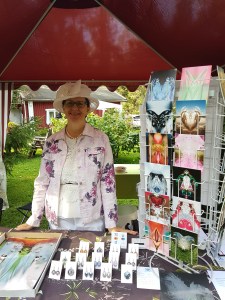
Yhteisnäyttelyt – Group exhibitions – Mostre collettive -Vuoden luontokuvatapahtuma Logomo Turku 22.10.2016 – Rymättylän kirjasto 28.3 -11.5.2018 näyttely Ritva Inkeri Aaltosen kanssa -Mökki Galleria Kaarina 3.11 – 29.11.2019 Imaginary Birds yhteisnäyttely -B-Galleria Turku 12.3.2020-koronakeskeytys näyttely Mari Oikarisen kanssa -Galleria Aina nettigalleria 10.5-19.6.2020 -Yhteisnäyttely Kuusiston Taidekartano Kaarina 7.6.-2.8.2020 Metsän Väkeä yhteisnäyttely -Yhteisnäyttely Maan ääni, Galleria Alkuvoima Turku 14.1-10.2.2021
The book “ Fosforikeiju ”
The card and therapy package Jään Lumous -Grace of Ice
44 A6 format photo cards divided into 4 sets of 11 according to the elements of nature: air, fire, water and earth
un giornalista in viaggio che non sopporta gli ombrelli
 Kaisa Sirén lives in Rovaniemi, within the Arctic Circle of Finnish Lapland, where she works as a freelance photographer and artist.

 Kaisa Sirén e l’arte di rendere visibile l’invisibile







 Paula Mikkilä

 Milla Piirainen

 Taru Rouhiainen



 Saila Seppo






 Today I have the pleasure of introducing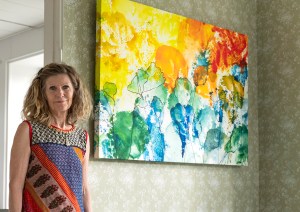












 Today I have the pleasure of introducing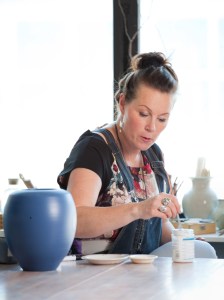






 Saila Seppo quando l’arte naif diventa tecnologica attraverso un’esplosione di colori che trasmettono gioia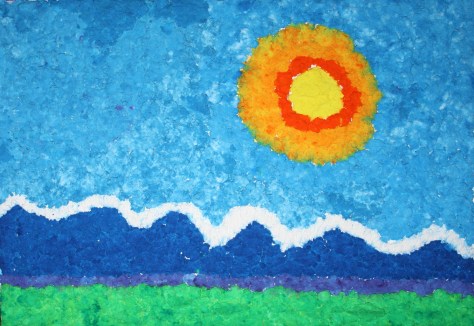


 Satu Kekäläinen una fiaba nata dal ghiaccio


 The exhibitions where she participated
 Yhteisnäyttelyt – Group exhibitions – Mostre collettive


 giuseppe genta blog