Kaisa Sirén lives in Rovaniemi, within the Arctic Circle of Finnish Lapland, where she works as a freelance photographer and artist.
She studied photojournalism in Canadabut moved back to Finland after her studies.
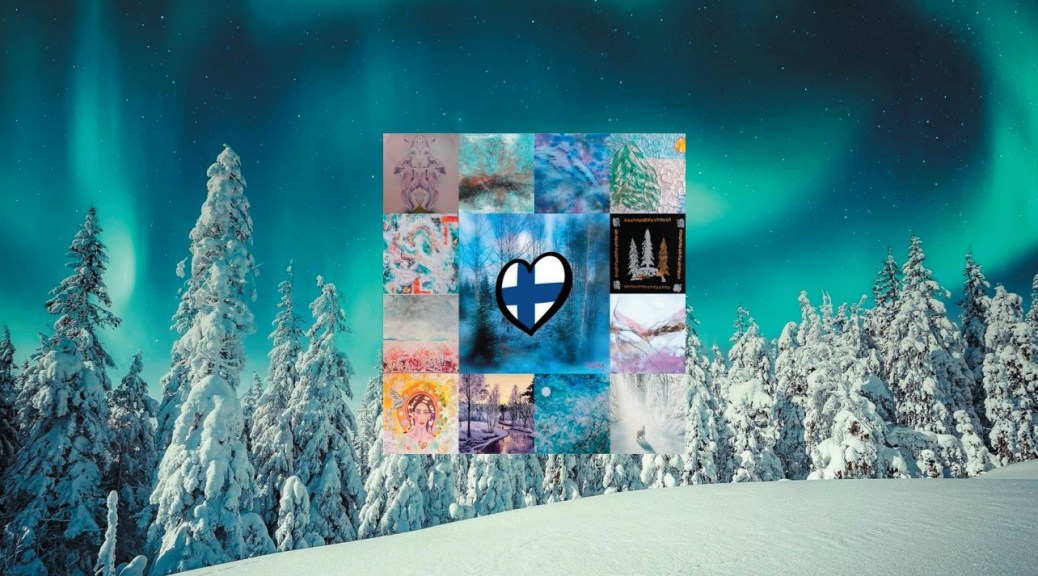
Her works are widely published in various Finnish magazines and newspapers, and she have had several solo and group exhibitions in Finland, Sweden, Denmark, Scotland, USA and Germany She is a photographic artist who makes the landscape of her soul visible with Intentional Camera Movement, using the northern landscapes of Finland as a backdrop. She focuses on themes related to the seasons of Lapland and the sensitivity of nature. She selects subjects from nature and transforms them into elements that were initially absent, thus visualizing the invisible. She is the co-founderof the ICM Photo Academy, where she teaches ICMphotography coursesboth in person and online.
Since 2017, she has run an art gallery called Villa Vinkkeli in her hometown.
Then she started to focus fully on ICM photography and making art. Kaisarealized she was invisible as a child, which led her to feel somewhat of an outsider even as an adult. ICMoffers a way to make invisible feelings and repressed emotions visible.
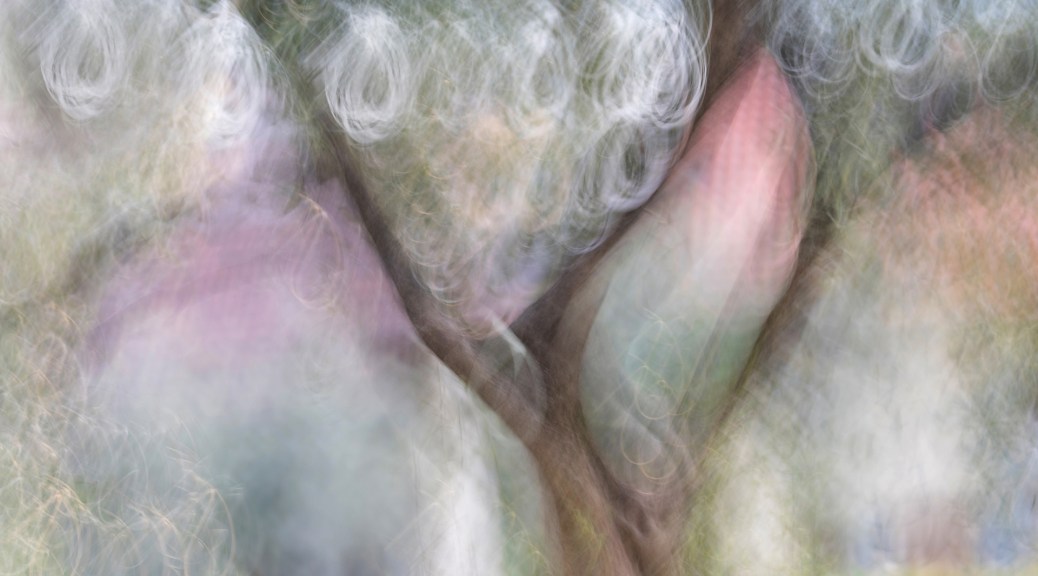
When taking a photo with ICM, the movement of the camera can create elements that weren’t initially present in the scene and bring hidden things to light.
It retains the same serendipity and element of surprise that have always accompanied her throughout her life.
These are some of the foundations of her art today. Intentional Camera Movement (ICM) is a playful, expressive approach to photography that invites the photographer to let go of strict representation and start creating images that feel as much as they show.
The technique behind ICMis to use a relatively long shutter speed, something like 0,5or1second to start with, and deliberately move the camera during the exposure.
The results vary depending on the time, the speed and size of the movement and the lens being used as well as many other factors. With time you can learn to control the movements and create intentional results but there is always an element of surprise involved
Kaisa Sirén e l’arte di rendere visibile l’invisibile
Kaisa Sirén vive a Rovaniemi, nel Circolo Polare Articodella Lapponia finlandese, dove lavora come fotografa e artista freelance.
Ha studiato fotogiornalismo in Canada, ma è tornata in Finlandia dopo gli studi.
Le sue opere sono ampiamente pubblicate su diverse riviste e giornali finlandesi e ha tenuto numerose mostre personali e collettivein Finlandia, Svezia, Danimarca, Scozia, Stati Uniti e Germania.
È un’artista della fotografia che rende visibile il paesaggio della sua anima attraverso un movimento intenzionale della fotocamera, utilizzando come sfondo i paesaggi settentrionali della Finlandia.
Si concentra su temi legati alle stagioni della Lapponia e alla sensibilità della natura. Sceglie soggetti dalla natura e li trasforma in elementi inizialmente assenti, visualizzando così l’invisibile.
È co-fondatrice dell’ICM Photo Academy, dove insegna corsi di fotografia ICM sia di persona che online.
Dal 2017 gestisce una galleria d’arte chiamataVilla Vinkkelinella sua città natale.
Successivamente ha iniziato a dedicarsi completamente alla fotografia ICMe alla creazione artistica. Kaisa si rese conto di essere invisibile fin da bambina, il che la portò a sentirsi in qualche modo un’emarginata anche da adulta.
L’ICM offre un modo per rendere visibili sentimenti invisibili ed emozioni represse.
Quando si scatta una foto con l’ICM, il movimento della fotocamera può creare elementi inizialmente non presenti nella scena e portare alla luce cose nascoste.
Mantiene la stessa serendipità e lo stesso elemento di sorpresa che l’hanno sempre accompagnata nel corso della sua vita.
Questi sono alcuni dei fondamenti della sua arteodierna. Il movimento intenzionale della fotocamera (ICM) è un approccio ludico ed espressivo alla fotografia che invita il fotografo ad abbandonare la rappresentazione rigida e a iniziare a creare immagini che trasmettano emozioni oltre che immagini.
La tecnica alla base dell’ICM consiste nell’utilizzare un tempo di posa relativamente lungo, ad esempio 0,5o 1secondo per iniziare, e muovere deliberatamente la fotocamera durante l’esposizione.
I risultati variano a seconda del tempo, della velocità e dell’ampiezza del movimento, dell’obiettivo utilizzato e di molti altri fattori.
Con il tempo si può imparare a controllare i movimenti e a creare risultati intenzionali, ma l’elemento sorpresa è sempre presente.
As a December girl polar night is my favourite time of the year. When November falls and the first snow covers the ground I am home! The short days mean that we go directly from sunrise to sunset and have the most stunning colors during those short hours of daylight. It is the time to go out with the camera
Kaisa Sirén – Polar Night
Kaisa Sirén – Polar Night
Kaisa Sirén – Polar Night
Kaisa Sirén – Polar Night
Kaisa Sirén – Polar Night
Kaisa Sirén – Polar Night
Kaisa Sirén – Polar Night
The Most Resilient
I have visited Antarctica three times and it is by far my favourite continent. and the favourite creature is the emperor pengune. They have chosen the most peculiar strategy for survival wintering in those harsh conditions while incubating the egg. They must be the most curious and the most resilient creatures of us all.
Kaisa Sirén – The Most Resilient
Kaisa Sirén – The Most Resilient
Kaisa Sirén – The Most Resilient
Kaisa Sirén – The Most Resilient
Kaisa Sirén – The Most Resilient
Kaisa Sirén – The Most Resilient
Kaisa Sirén – The Most Resilient
Pelican Brief
In January 2026 I travelled to northern Greece, to Lake Kerkini, with a single intention: to photograph Dalmatian pelicans. I had seen images of these immense, almost improbable birds and felt a growing pull to meet them in their winter gathering place. I did not go in search of landscape or light. I went for the birds – and to see what might happen when their movement met my camera moves.
Kaisa Sirén – Pelican Brief
Kaisa Sirén – Pelican Brief
Kaisa Sirén – Pelican Brief
Kaisa Sirén – Pelican Brief
Kaisa Sirén – Pelican Brief
Kaisa Sirén – Pelican Brief
Kaisa Sirén – Pelican Brief
Wood Wide Web
My series Wood Wide Web has been inspired by the book Hidden Life of Trees by Peter Wohlleben, (2016). In the book Wohlleben describes his studies and observations about the life of trees during his long career as a forester. He talks about the ability the trees have, to communicate, form communities, to alarm each other and take care of their offspring and elders. The observations may be difficult to prove scientifically and equally difficult to photograph. In my attempts to make the phenomena visual I use a technique called Intentional Camera Movement (ICM). It is a technique during which the camera is moved during a long exposure. Thanks to ICM the images may have elements, which bring unseen stories or actions visible. It may form layers to the images which make room to the imagination of the viewer. With this series I want to bring out the importance of trees to us humans as well as that they may be much more complex than we ever have thought. Wise old trees, they need our respect.
Kaisa Sirén – Wood Wide Web
Kaisa Sirén – Wood Wide Web
Kaisa Sirén – Wood Wide Web
Kaisa Sirén – Wood Wide Web
Kaisa Sirén – Wood Wide Web
Kaisa Sirén – Wood Wide Web
Kaisa Sirén – Wood Wide Web
Kaisa Sirén – Wood Wide Web
Iceberg Graveyard
I have always been drawn to the beauty the Arctic and Antarctic landscapes provide. This body of work illustrates vanishing ice of the polar regions initiated by climate change. The work is a collection of poetic abstractions, depicting the progression of global warming. The polar regions are more rapidly affected than many other areas on the globe. Unfortunately, the vastness of the problem is not yet well comprehended, due to lack of human habitation in those remote areas. These images are impressions of the beauty this world represents and the impending loss we face.
Kaisa Sirén – Iceberg Graveyard
Kaisa Sirén – Iceberg Graveyard
Kaisa Sirén – Iceberg Graveyard
Kaisa Sirén – Iceberg Graveyard
Kaisa Sirén – Iceberg Graveyard
Kaisa Sirén – Iceberg Graveyard
Kaisa Sirén – Iceberg Graveyard
Lost in Venice
In January 2025 I had a chance to participate in a photography workshop in Venice. Before departure I did some homework and set my goals what I want out of the workshop. I learnt about the work of a German painter Wolf Bertram Becker who had been painting Venice buildings in and impressionistic, almost ICM style. This was a great inspiration for me and gave me direct guidelines about what I would be looking for besides the iconic vistas in the city. The next images are of his painting which served as my inspiration.
Kaisa Sirén – Lost in Venice
Kaisa Sirén – Lost in Venice
Kaisa Sirén – Lost in Venice
Kaisa Sirén – Lost in Venice
Kaisa Sirén – Lost in Venice
Kaisa Sirén – Lost in Venice
Kaisa Sirén – Lost in Venice
Dancing My Nature
This has been an exciting project photographing dancers out in the nature during our 7 seasons in Lapland. With these images I want to celebrate the precious nature we have in the North and also bring hope that it will stay for the future generations. I hope that the dances will convey the special light and colours we have in different seasons.
Kaisa Sirén – Dancing My Nature
Kaisa Sirén – Dancing My Nature
Kaisa Sirén – Dancing My Nature
Kaisa Sirén – Dancing My Nature
Kaisa Sirén – Dancing My Nature
Kaisa Sirén – Dancing My Nature
Kaisa Sirén – Dancing My Nature
Dream
Earlier I slept well and had strong, colourful dreams. A long time ago, I suffered a burnout, lost my dreams and a good sleeping pattern. Now that my life is balanced again the dreams are slowly coming back. In this series I visualise the struggles, but yet how more light, harmony and colour has become more apparent in my life. And this has been achieved thru doing in life what I love.
Kaisa Sirén – Dream
Kaisa Sirén – Dream
Kaisa Sirén – Dream
Kaisa Sirén – Dream
Kaisa Sirén – Dream
Kaisa Sirén – Dream
Kaisa Sirén – Dream
Indian Flashes
These images are taken during my visit to India in 2018. It was a sudden unexpected journey as my nephew got married and I was invited to the wedding. I decided to not take it as a photography trip but rather just go and explore the colours and the feeling of the New Delhi streets as much as possible. It turned our to be a colour galore and just perfect for ICM. I did not take any traditional images which was also very liberating. I just concentrated on the wonderful colours of the Indian street and enjoyed the transformation I was able to create with ICM.
Kaisa Sirén – Indian Flashes
Kaisa Sirén – Indian Flashes
Kaisa Sirén – Indian Flashes
Kaisa Sirén – Indian Flashes
Kaisa Sirén – Indian Flashes
Kaisa Sirén – Indian Flashes
Kaisa Sirén – Indian Flashes
Rainforest People of Papua
One of my dreams became true in august 2025 as I was able to travel to Papua New Guinea and attend a local cultural festival, Sing-Sing of Mt Hagen. It is a country of more than 1000 tribes and 850 languages. They still lead a very traditional jungle life and collect food from the forests. The festival was a mixture of chaos, screaming, dancing, marching, singing and a kaleidoscope of colours. For three days I was able to observe, participate and answer to the countless smiles.
Winteris the longest season in Finland, lasting about 200 days in Laplandand 3-4 months in the southern part of the country.
Temperatures in the north of the country are usually below freezing for most of the winter, providing a sense of absolute peaceand crystal-clear air.
A fairytale landscape will unfold before your eyes, with abundant snow, frozen lakes, and the chance to admire the Northern Lights, the icing on the cake.
In Lapland, everything seems muffled, with the snow reflecting an almost unreal light, even illuminating the polar night.
The first snow of the season, “ Ensilumi” in Finnish, is always a very exciting moment, eagerly awaited by Finns, and its arrival, given the large size of Finland, which extends for over 1000 kilometers from north to south, can vary depending on where you are.
In Lapland, which lies mostly above the Arctic Circle, the first snow arrives as early as September, although I happened to encounter it many years ago in late June during the car transfer from IvaloAirport to Inari. Finlandis a wonderful country that I recommend visiting in any season, but if you want to see it at its most elegant and fascinating, choose winter!
Thinking about Finnish winter I had the idea to ask twelve incredibly talented Finnish artists to show us “ Suomen talvi “ through their eyes, and I must say, the result of this experiment is truly astonishing, as you’ll see
In the article, along with a brief introduction to the artist, you’ll find two paintings: the first is her “ Suomen talvi “ and the second is one of her favorites I invite you to visit their social media pages and websites to better understand their talent.
If you are interested in some of their works, the artists could reserve a small discountfor the readers of my Blog
To Satu Kekäläinen, Mari Knuuttila, Meria Q, Paula Mikkilä, Milla Piirainen, Taru Rouhiainen, Minna Scheinin, Saila Seppo, Kaisa Sirén, Maj Sjö, Martina Uthardt, Liisa Viima, I extend my heartfelt thanks for making my idea possible
Satu Kekäläinen
Satu Kekäläinen, she was born inHelsinki, but after living in various places acrossFinland, she currently lives in Lieto.
Ice is a sort of common threadthat has accompanied Satu throughout her life, but artistically it all began in 2015 when, needing to find strength and breathe fresh air, she immersed herself in the nature of nearby Lake Littoistenjärvi, and since it was winter, she began photographing with her camera the figures she saw in the lake ice.
You can see her works on her Instagramand Facebookpages and website
For Suomen talvi , she presents: Winter Fairy – aluminium print 30 × 40 cm edition 1/10 – photographed under a blue sky in the sunshine with a macro mirroring function from ice collected from Finnish winter nature
As a second works, she presents: The Soul of the Water – aluminium print 30 × 40 cm edition 1/10 – macro photography of ice collected from nature in winter in the colors and energies of blue anemones in spring
Sagastina – Winter Fairy
Sagastina – The Soul of the Water
Mari Knuuttila
Mari Knuuttila born in Lapua, a town located in Southern Ostrobothnia and where she currently lives and creates her works in her studio. Marihas been painting for about seven years, although her main profession is that of Chief Inspector at the State Administrative Agency, a role that requires strict compliance with laws and regulations.
Through painting, Mari has found a way to give free rein to her visual art, free from rules or pre-established patterns.
You can find more information about Marion her Instagramand Facebookpages andwebsite ForSuomen talvi she presents:Winter Silence – acrylic / mixed media on canvas 89 x 115 cm – this work captures the quiet strength of the Nordic winter – a frozen horizon where light and shadow meet in stillness. Layers of texture reflect frost, earth and the silent breath of the northern landscape. As a second paintingshe presents: With You – mixed media on canvas 80.5 x 65 cm – a layered field of ochre and shadow speaks of intimacy, memory and silent strength. The surface carries traces of time, emotion and the quiet power of being together. Both paintings are available for purchase on her website.
Mari Knuuttila – Winter Silence
Mari Knuuttila – With You
Meria Q aka Merja Sipiläinen-Kuhlberg
Merja Sipiläinen-Kuhlberg was born inArtjärvi (Lake of Artin english) but lives in Turku, a beautiful city on the west coast of Finland. Meria Q became interested in art as a young girl, sketching evening dresses in her notebooks, and she cultivated this interest as a teenager by designing fabric prints.
As often happens, life sometimes takes strange turns, andMeria Q, abandoning her passion for art, took a different direction that led her into the world of marketing and business.
However, in early 2010, her artistic creativity reawakened and has been unstoppable ever since.
She held her first solo exhibition in 2018, followed by numerous others.
You can find more information about Meria Q on her Instagram page and website For Suomen talvi she presents: First snow on the mountains –watercolour 19×14 cm, 2020 – this wonderful painting, which is a hymn to the joy of the first snow falling on the mountains, is part of the series that Merja Q has dedicated to Lapland. As a second paintingshe presents: Poppies – watercolour 28×38 cm, 2023 – these wonderful poppies are fragile red spots, which in the middle of a field can give the hearts of sensitive people incredible emotions. Both paintings are available for purchase on her website.
Meria Q – First snow on the mountains
Meria Q – Poppies
Paula Mikkilä
Paula Mikkilä born in Karvia, a hidden pearl of Finland surrounded by the wonderful rural landscapes of the Karvianjoki river, but resident in Tampere for over twenty years.
She graduated from the Department of Teacher Education at the University of Jyväskylä as a teacher specializing in fine arts and has dedicated a good part of her life to teaching as an elementary school teacher sharing much of her creative moments with children and teenagers.
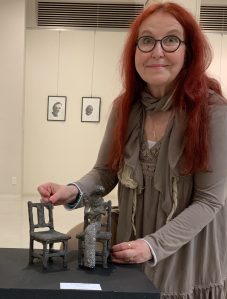
In the 80s she created a considerable quantity of oil paintings, then after her move to Tampereshe devoted herself to bronze sculpture and for almost twenty years in the evenings after her school work she went to the foundry.
Working with bronze is not easy, but it’s incredibly rewarding, like the material itself, which, once transformed into a work of art, can convey incredible emotions. Pauladraws inspiration for her works from her surroundings: home, nature, animals, and people, who, once part of her creative process, tell stories and fairy tales that take on an imaginative life of their own.
You can find more information about Paula on her Instagram page and website For Suomen talvi she presents: Two white spruces –acrylic, 40×40 cm, 2020 – this very beautiful painting is part of the series “Sheltered by the Forest” As a second workshe presents: Two spruces– bronze, 29/26/13 cm, 2018 – a beautiful bronze statue depicting two spruces Both works are available for purchase on her website.
Paula Mikkilä – Two white spruces
Paula Mikkilä – Two spruces, bronze
Milla Piirainen
Milla Piirainenis a Helsinki-based visual artist.
Her work is characterized by a versatile use of colors, materials, and techniques, through which she portrays human experiences and natural phenomena.
She works with acrylic, oil, and mixed mediaand primarily uses a palette knife, with which she has created her distinctive, layered, and vividly textured painting style.
Her works do not settle for a merely aesthetic impression but invite the viewer to explore deeper meanings and emotions that art can evoke.
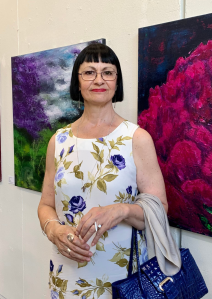
She is primarily a marine painter, and the seais a subject she returns to again and again. Flowers are also part of her artistic expression. The interplay of the characteristic colors and forms of the sea and flowers offers her endless possibilities for creativity
You can find more information about Milla on her Instagram page and website For Suomen talvi she presents: Purpura – oil on canvas 82 x 92 cm (with frame) – in this stream flowing between snow-covered trees, Milla used shades of violet and purple to paint the shadows on the snow and the reflections in the icy water. At first glance, we are greeted by a magical atmosphere where light plays a fundamental role. A very beautiful painting! As a second paintingshe presents: Light– acrylic on canvas 70 x 60 diptych – This work is a treatise on light and shadow. While painting, she tell the viewer stories about the beauty that surrounds me. Light and shadow go hand in hand like lovers. This story is about love. Light, light. Both paintings are available for purchase on her website.
Milla Piirainen – Purpura
Milla Piirainen – Light
Taru Rouhiainen
Taru Rouhiainen born inHyvinkää but currently lives in Vantaa. Taru’s is one of those stories that shows us how not only painting, but art in general, can be the best medicine for overcoming difficult times.
In 2020, after the crisis,Taru found herself needing something that would allow her not only to stay busy but also to process and express her feelings.And so, making a life-changing choice, she enrolled in a painting course and fell in love with art!
Before discovering painting, she had always appreciated colors and, above all, their effect on our emotions, bringing joy into our homes.
You can find more information about Taru on her Instagram and Facebook pages and website For Suomen talvi she presents: White noise – mixed medium in canvas90×70 cm – in this abstract work Taru makes us understand how she loves to play with colors, layers and textures that make her work full of emotions, stories and energy. As a second painting she presents:Waterlilly –mixed medium on canvas 73×60 cm – this painting is part of the “Lummelampi” series and is inspired by the famous Water Lilies series by Monet, reinterpreting the theme with a material and contemporary style, depicting pink and white water lilies floating on a pond in blue and green tones, with bold brushstrokes that create a sense of movement of the water. Both paintings are available for purchase on her website.
Taru Rouhiainen- White noise
Taru Rouhiainen – Waterlilly
Minna Scheinin
Minna Scheinin was born in Turku, a beautiful city on the west coast of Finland, where she lived for a long time before moving toKaarina, where she currently lives. Minna often visitsItaly, where she has a home onLake Iseo, and she says this Italian experience has greatly influenced her artistic development.
She worked for many years as aforeign language teacher ( Swedish and English ) and was responsible for pedagogical development and online teaching at her University of applied sciences.
In 2011, she successfully completed a professional photography course at the New York Institute of Photography( online ) and in 2013, she earned a degree in editorial graphics.
Since then, her photographic work has transformed into an artistic journey where her creativity has finally found a way to express itself through her art. Minnaexpresses her art through photography, which plays a primary role, but also through painting and mosaics.
In photography, she began studying theICM( Intentional Camera Movement ) technique, which began a journey that led her to essentially paint with the camera, intentionally moving it during the exposure. Nature is her greatest source of inspiration, and the deepest essence of her images is the beauty that surrounds us and often goes unnoticed.
You can find more information about Minna’s artistic work on her Instagram page and these are her email addresses : scheinin.minna@gmail.comminna@scheinin.fi For Suomen talvi she presents: Winter night – acrylic painting, 42 x 29,7 cm – with this painting, Minna managed to recreate the magical atmosphere of a Finnish winter night and embellished the painting with small fragments of glass capable of giving it a natural brilliance typical of the wonderful polar night. As a second work she presents: Snowballs – photograph– with this very suggestive image Minna has captured a winter phenomenon in which small accumulations of snow or frost settle on the tips of common reeds (Phragmites australis) that emerge from partially frozen bodies of water with bright reflections created by the sun Both works are available for purchase on her website.
Minna Scheinin – Winter night
Minna Scheinin – Snowballs
Saila Seppo
Saila Seppowas born in Kouvola but moved to Sastamala at the age of 1 or 2.
She studied in Espoo and currently live in Helsinkifrom a long time.
She worked at theKemira factory in Pori and has worked and continues to work for the Research Council of Finland.
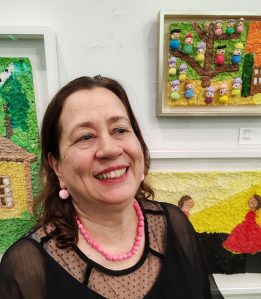
She is a member of the Helsinki Art Association, Espoo Art, and the Finnish Artists’ Association. Sailais undoubtedly a multifaceted artist, and for her, the most important thing in art is the ability to create a new, diverse, and colorful work of art. Sailaholds a PhD in chemistry and a degree in technology, and thanks to these studies, she has a deep understanding of materials and pigments. This offers her a wide range of artistic possibilities, which she translates into herworks, which closely resemble naive art, but in this case, I would saytechnological.
Thanks to her research, Sailacreated Sisusavi®, a material developed from natural ingredients that works well with all types of dyes, giving paintings a vivid surface and vibrant colors. Sisusavi®is a soft, water-based, moldable mass that can be colored with pigments or vegetable dyes and hardens at room temperature through water evaporation. Sisusavi®is a natural microcellulose material that contains no clay or plastic dyes, and the mass reproduces even the smallest details.
This product, entirely developed bySaila, is available for sale on Greenbutton.fi. More information about Sailacan be found on her social media pages, InstagramandFacebook, and on her website, sailaseppoart.fi, For Suomen talvi she presents: Snow – Sisusavi® and pigments on canvas, 47×55 cm – this large snow-covered tree, surrounded by a blanket of snow and kissed by the sun, has a naive, almost artisanal feel and the cracking effect due to the use of Sisusavi® makes it almost look like a material mosaic. As a second painting she presents:Flowers on Display – Sisusavi® and pigments on canvas, 40×59 cm – this work is part of the Sisusavi® project which stands out for its naive and material artistic style, characterised by a vibrant use of colour and three-dimensional textures that convey a sense of joy. Both paintings are available for purchase on her website.
Saila Seppo – Snow
Saila Seppo – Flowers on Display
Kaisa Sirén
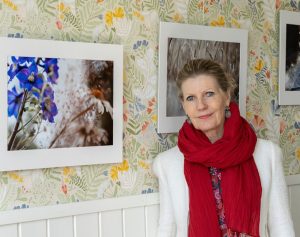
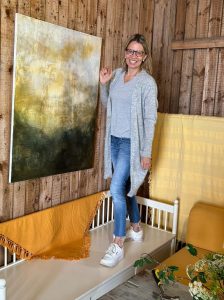
Kaisa Sirén lives in Rovaniemi, within the Arctic Circle of Finnish Lapland, where she works as a freelance photographer and artist.
She is a photographic artist who makes the landscape of her soul visible with Intentional Camera Movement, using the northern landscapes of Finlandas a backdrop.
She focuses on themes related to the seasons of Laplandand the delicacy of nature.
She selects subjects from nature and transforms them into elements that were initially absent, thus visualizing the invisible.
She is the co-founder of the ICM Photo Academy, where she teaches ICM photography courses both in person and online.
She has held several solo and group exhibitions in Finland, Sweden, Denmark, Scotland, the United States, and Germany, and since 2017, she has run an art gallery called Villa Vinkkeliin her hometown.
Her artistic focus is entirely on ICM photography and artistic creation. ICM offers a way to make invisible feelings and repressed emotions visible.
When taking a photo in ICM, camera movement can create elements that were initially absent in the scene, making invisible elements visible.
This technique possesses the same randomness and element of surprise that have always accompanied Kaisa throughout her life.
More information about Kaisacan be found on her social media pages, InstagramandFacebook, and on her website For Suomen talvi she presents: First Snow – acrylic painting, 2025, unframed 60x80cm – in this Arctic landscape, Kaisa captures the magical moment of the first snowfall covering the autumn vegetation. The contrast between the warm tones (red and pink) of the earth and the cold tones (blue and grey) of the sky is her stylistic signature, with which she seeks to make visible the “invisible” emotions and sensations of nature. Also noteworthy is the vegetation (the red and purple marks in the foreground) which are transformed into abstract shapes. As a second work she presents:Solitude – photograph, 2025, unframed 30x40cm – this beautiful photograph by Kaisa, where the minimalist aspect of the scene prevails, leads us to a reflection on solitude which is not necessarily a negative feeling but in this case a condition of deep connection with the wild nature of Lapland. Both works are available for purchase on her website.
Kaisa Siren – First snow, Ensilumi
Kaisa Siren – Solitude
MAJ SJÖ
Maj SJÖ, born in Helsinki, where she has a studio space in Kaapelitehdas, Finland’s largest cultural centre, but currently lives in Espoo where she also creates in her home studio.
When I first saw MaJ’sworks, I immediately understood how she managed to capture and convey in her art all those small and large miracles that life can give us day after day.
Her collection of works on the Archipelago and in general on everything that is sea or water (after all, her surname SJÖ in Swedish means lake/sea) can convey incredible emotions and for those like me who have experienced the magic that Hankocan convey, looking at her paintings that portray her means reliving moments of indescribable joy and serenity.
You can find more information about Maj on her Instagram and Facebook pages and website For Suomen talvi she presents: Winter Magic – oil on canvas, 2022, 100 x 80 cm – this painting features an ethereal, almost magical style, typical of Nordic illustrations, where snow and soft light create a suspended, enchanted atmosphere. The almost monochromatic choice, with a strong emphasis on white and elongated shadows (like that of the fox in the center), is a distinctive element that evokes the silence and solitude of Nordic winter landscapes. As a second painting she presents:What a Lady! – oil on canvas, 2023, 50 x 50 cm – in the background of this painting you can see a famous Helsinki landmark (Havis Amanda), which makes it very Finnish. Both paintings are available for purchase on her website.
Maj Sjo – What a Lady
Maj Sjo – Winter magic
Martina Uthardt
Martina Uthardt, born in Malax, where she currently lives in this big village and welcoming of about 5000 inhabitants in Southern Ostrobothnia, whereSwedishis spoken rather than Finnish (about 6% of Finns speak Swedish)
After a 10-year stint running a photography agency specializing in portraits, Martina has dedicated herself fully to painting professionally since 2021.
She has experimented with various techniques but currently prefers acrylic painting with its possibilities for layering and variations that make each painting alive and unique in different lights.
When I first saw Martina’s paintings, I was struck by how this artist was able to perfectly represent theFinlandI love so much.
You can find more information about Martina on herInstagramand Facebookpages and website For Suomen talvi she presents: Just Breathe – acrylic on canvas, 2021, 65 x 81 cm – this painting is intended to evoke a moment of pause and awareness, an invitation to slow down and take a breath of fresh air through the delicate pink and white tones contrasted by bold graphic lines. It is part of her abstract art collection, characterized by a style she herself defines as “mindful” allowing colors and shapes to play freely on the canvas. As a second painting she presents:Togetherness – acrylic on canvas, 2025, 100 x 81 cm – the painting depicts two swans swimming side by side under a large full moon in a Nordic landscape at night. The artist has described it as a “must-see” subject, conveying feelings of calm and beauty. The work explores the theme of connection and harmony, using swans as symbols of loyalty and enduring love. Both paintings are available for purchase on her website.
Martina Uthardt – Just breathe
Martina Uthardt – Togetherness
Liisa Viima
Liisa Viima, born in Ouluand currently based in Espoo.
Although she began painting as a teenager and dreamed of becoming a professional artist, she chose a more conventional path, earning a master’s degree in economics and dedicating herself to her family, including raising two daughters and caring for horse – her lifelong passion.
After facing significant life challenges, Liisa experienced a personal transformation that led her back to her original calling: painting.
Her mission became clear – to bring joy and beauty into the world through her art. Liisa’s style is contemporary and abstract, often infused with elements of realism, surrealism, and even whimsy.
Recurring themes in her work include humanity, love, and forgiveness, expressed through symbolic imagery such as faces, hearts, stars, hands, the moon, pigeons and also horses.
For Liisa, horses represent courage and nobility values that have guided her life and artistic journey.
You can find more information about Liisa on herInstagramandFacebookpages and website For Suomen talvi she presents: Mattitja– mixed media. Acrylic, oil, plaster reliefs, brick, mica pigment and epoxy, 2025, 90c90x4cm – from her Modern Icons collection – This painting explores the identity and deep awareness of being and includes some recurring symbols in the works of this artist, such as the dove (symbol of peace), the burning heart and floral motifs that evoke themes of spiritual awakening and love. As a second painting she presents:Ani Or – mixed media. Acrylic, oil, plaster reliefs, brick, mica pigment and epoxy, 2026, 90c90x4cm – from her Modern Icons collection – this painting features a central figure with a golden halo, surrounded by purple roses, a dove in her hand, and a pulsating red heart on her chest. Liisa’s style, characterized by an expressive use of color, bold textures, and the integration of symbolic and spiritual elements, truly emerges. Both paintings are available for purchase on her website.
While Denmark is saying goodbye to traditional mail and will definitively cease the delivery of paper letters from 31 December 2025, in Santa Claus’s country, Christmas greeting cardswill continue to be a real must.
I know that Finns use Christmas greeting cards with great pleasure and many are handmade by themselves.
Sending and receiving these greetings by post is an integral part of Finnish Christmas tradition, a symbol of love, peace and friendship, and strengthens the bond with the legendary figure of Santa Claus
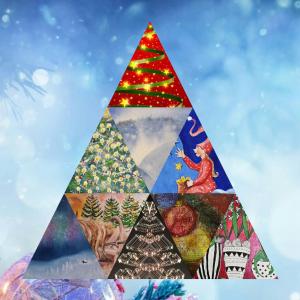
Thinking about Christmas atmosphere I had the idea to ask eight incredibly talented Finnish artists to show us Christmas atmosphere through their eyes, and I must say, the result of this experiment is truly astonishing, as you’ll see.
In the article along with a brief introduction to the artist, you’ll find two paintings: the first is her Christmas atmosphere and the second is one of her favoritesand both are available for sale
I invite you to visit their social media pages and websites to better understand their talent.
To Satu Kekäläinen, Mari Knuttila, Ella Petman, Meria Q, MaJ Sjö, Martina Uthardt, Ulla Väisänen and Liisa Viima a heartfelt thank you for making my idea of presenting Christmas atmosphere in a slightly different way possible.
Santa Claus Post Office has been operating since 1985 and receives over 2 million letters a year – for more information see website
Satu Kekäläinen a fairy tale born from ice
Satu Kekäläinen, she was born inHelsinki, but after living in various places acrossFinland, she currently lives in Lieto.
Ice is a sort of common threadthat has accompanied Satu throughout her life, but artistically it all began in 2015 when, needing to find strength and breathe fresh air, she immersed herself in the nature of nearby Lake Littoistenjärvi, and since it was winter, she began photographing with her camera the figures she saw in the lake ice.
You can see her works on her Instagramand Facebookpages and website
For Christmas atmosphere, she presents: Christmas tree light
As a second photos, she presents: Fairy Cow This ” Fairy Cow “ will be included in Kaarina’s upcoming group exhibition from January 10 to 26, 2026, at Mökkigalleria(Cottage Gallery).
It is photographed in nature, with ice. The colors in the image come from the flowers and the light from the sun. Both photos are available for purchase on her social media pages.
Satu Kekäläinen – Christmas tree light – Valokuusi
Satu Kekäläinen – Fairy Cow – Keijulehmä
Mari Knuuttila when painting becomes poetry
Mari Knuuttila born in Lapua, a town located in Southern Ostrobothnia and where she currently lives and creates her works in her studio. Marihas been painting for about seven years, although her main profession is that of Chief Inspector at the State Administrative Agency, a role that requires strict compliance with laws and regulations.
Through painting, Mari has found a way to give free rein to her visual art, free from rules or pre-established patterns.
You can find more information about Marion her Instagramand Facebookpages andwebsite For Christmas atmosphere, she presents: Ornament Glow As a second paintings, she presents: Shadows in Flame Both paintings are available for purchase on her website.
Mari Knuuttila – Ornament Glow – Joulupallojen hehku
Mari Knuuttila – Shadows in Flame 81cm x 100cm
Ella Petman after a long journey she found her paradise
Ella Petman, born in Jyväskylä, central Finland, where she has lived most of her life, except for the period when she moved to Tampere while studying to join the police.
Since May 2023,Ella has begun to devote herself entirely to painting and has begun producing her works, which are mostly semi-abstract, leaving the observer complete freedom to interpret the painting according to their own vision.
You can find more information aboutElla on her Instagram page and website For Christmas atmosphere, she presents: Lights of the North As a second painting , she presents: The Tale of the Nebula Both paintings are available for purchase on her website.
Ella Petman – Lights of the North
Ella Petman – The Tale of the Nebula
Meria Q aka Merja Sipiläinen-Kuhlberg, a mysterious artist who believes in miracles created by the free flow of the mind
Merja Sipiläinen-Kuhlberg was born inArtjärvi (Lake of Artin english) but lives in Turku, a beautiful city on the west coast of Finland. Meria Q became interested in art as a young girl, sketching evening dresses in her notebooks, and she cultivated this interest as a teenager by designing fabric prints.
As often happens, life sometimes takes strange turns, andMeria Q, abandoning her passion for art, took a different direction that led her into the world of marketing and business.
However, in early 2010, her artistic creativity reawakened and has been unstoppable ever since.
She learned acrylic painting during an astronomical painting course, and thanks to the guidance of excellent professional teachers, she acquired skills in mixed media and watercolor painting.
Once her artistic streak was rekindled, she began painting and drawing as much as possible.
She held her first solo exhibition in 2018, followed by numerous others.
You can find more information about Meria Q on her Instagram page and website For Christmas atmosphere, she presents: Peace on Earth As a second painting , she presents: Can you hear the water flowing? Both paintings are available for purchase on her website.
Meria Q – Peace on Earth, watercolour size A5water
Meria Q – Can you hear the water flowing? – 27cmx35cm, mixed media
MAJ SJÖ from Finland comes with a breeze of positivity
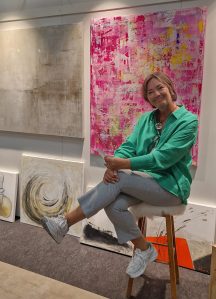
Maj SJÖ, born in Helsinki, where she has a studio space in Kaapelitehdas, Finland’s largest cultural centre, but currently lives in Espoo where she also creates in her home studio.
When I first saw MaJ’sworks, I immediately understood how she managed to capture and convey in her art all those small and large miracles that life can give us day after day.
Her collection of works on the Archipelago and in general on everything that is sea or water (after all, her surname SJÖ in Swedish means lake/sea) can convey incredible emotions and for those like me who have experienced the magic that Hankocan convey, looking at her paintings that portray her means reliving moments of indescribable joy and serenity.
You can find more information about Maj on her Instagram and Facebook pages and website For Christmas atmosphere, she presents: Many reasons to smile – Acrylic on canvas, 70cmx70cm As a second painting , she presents: Room of Vision – Oil on canvas, 40cmx40cm Both paintings are available for purchase on her website.
MaJ Sjö – Many reasons to smile – Acrylic on canvas, 70cm x70cm
MaJ Sjö – Room of Vision – Oil on canvas, 40cmx40 cm
Martina Uthardt from Finland send a hymn to the joy of living
Martina Uthardt, born in Malax, where she currently lives in this big village and welcoming of about 5000 inhabitants in Southern Ostrobothnia, whereSwedishis spoken rather than Finnish (about 6% of Finns speak Swedish)
After a 10-year stint running a photography agency specializing in portraits, Martina has dedicated herself fully to painting professionally since 2021.
She has experimented with various techniques but currently prefers acrylic painting with its possibilities for layering and variations that make each painting alive and unique in different lights.
When I first saw Martina’s paintings, I was struck by how this artist was able to perfectly represent theFinlandI love so much.
You can find more information about Martina on herInstagramand Facebookpages and website For Christmas atmosphere, she presents: Joyful Christmas – 61cmx50cm As a second painting , she presents: held by Light Collection, ” Breeze-kissed waves “, 120cmx100cm Both paintings are available for purchase on her website.
Martina Uthardt – Joyful Christmas – 61cmx50cm
Martina Uthardt – “Breeze-kissed waves”- 120cmx100 cm
Ulla Väisänen from Finland between dream and reality!
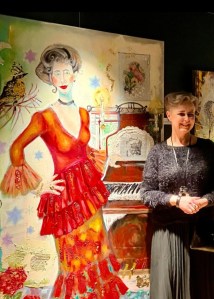
Ulla Väisänen, born in Nerkoo, Lapinlahti, a small village in central Finland. Ulla currently lives in Jyväskylä, a beautiful city that offers the opportunity to live what I call “a Finnish life” where quality of life is definitely at the top of the scale of values for living a good life.
Studied atKuopio Academy of Design (Textile art, designer) and pedagogy atTampere Open University
You won’t believe it but when she was young, after watchingFellini’s film “La Strada”, she fell in love with Italy and even started studying Italian.
I don’t know if the vision of this masterpiece by Fellini, where fantasy and reality often alternate, has somehow influenced the artistic vein of Ulla who began drawing and painting as a teenager, certainly her art is a well-calibrated mix of symbolism, surrealism and a bit of realism.
Her works can be viewed and requested through her social channels, Instagram ( ullamirjam ) andFacebook( Ulla Väisänen )
For Christmas atmosphere, she presents the card : ” A Christmas elf girl sends greetings in the form of stars“ As a second painting , she presents: ” Angry birds ” – 90cm x70cm, she painted it in 2003 and finished it by adding more birds in 2025 The painting is available for purchase on her social media pages.
Ulla Väisänen – A Christmas elf girl sends greetings in the form of stars
Ulla Väisänen – Angry birds – 90cmx70cm
Liisa Viima – It’s never too late to bring joy and beauty into the world
Liisa Viima, born in Ouluand currently based in Espoo.
Although she began painting as a teenager and dreamed of becoming a professional artist, she chose a more conventional path, earning a master’s degree in economics and dedicating herself to her family, including raising two daughters and caring for horse – her lifelong passion.
After facing significant life challenges, Liisa experienced a personal transformation that led her back to her original calling: painting.
Her mission became clear – to bring joy and beauty into the world through her art. Liisa’s style is contemporary and abstract, often infused with elements of realism, surrealism, and even whimsy.
Recurring themes in her work include humanity, love, and forgiveness, expressed through symbolic imagery such as faces, hearts, stars, hands, the moon, pigeons and also horses.
For Liisa, horses represent courage and nobility values that have guided her life and artistic journey.
You can find more information about Liisa on herInstagramandFacebookpages and website
For Christmas atmosphere, she presents: ” Liisa ” 2022 – 60cm x90cm x2cm, it’s a Finnish horse that pulls logs with twice its weight in the cold and the painting is based on “Liisa“, the family mare from Mikko Niskanen blockbuster film As a second painting , she presents: ” Coeur des Coeurs ” 2023 – 90cm x90cmx4cm, represents Christ after suffering, when everything has been done and forgiven. Both paintings are available for purchase on her website.
Liisa Viima – Coeur des Coeurs – 90cmx90cmx4cm
Click on the photos to enlarge them
Satu Kekäläinen – Christmas tree light – Valokuusi
Mari Knuuttila – Ornament Glow – Joulupallojen hehku
Ella Petman – Lights of the North
Meria Q – Peace on Earth, watercolour size A5water
MaJ Sjö – Many reasons to smile – Acrylic on canvas, 70cm x70cm
Martina Uthardt – Joyful Christmas – 61cmx50cm
Ulla Väisänen – A Christmas elf girl sends greetings in the form of stars
In Finland, there’s a special word to describe the magic of autumn: Ruska, a natural spectacle that is experienced as a true tradition in Northern Europe. Ruska is considered the Nordic equivalent of Japanese hanami, a moment of celebration of nature to be seized when it is present for only a brief moment.
The northern region of Laplandis the starting point of Ruska, with its landscape of taiga and forest-covered hills, before continuing south.
The protagonists of Ruska are warm colors like red, orange, and yellow, but brown and the colors of the leaves aren’t the only wonders the forests offer: mushrooms and berries, such as blueberries and cranberries, are treasures that grow during this period.
For Finns, Ruska is more than just foliage, and “Ruskaretki” is a typical excursion beloved by many Finns and tourists, a collective ritual consisting of hikes in national parks, days spent in mökki (the wooden cabins by the lake), and mushroom and berry picking thanks to jokamiehenoikeus (the right of every man). Ruska is a precious time of contemplation and recharging, marking the end of summer and preparing for the long Nordic winter.
I’ve been to Laplandmany times during the Ruska season and have been fascinated not only by the gorgeously colored leaves on the trees but also, above all, by the veritable autumnal sea that accompanies you as you walk across the incredible shades of leaves.
Thinking about Ruska, I had the idea to ask eight incredibly talented Finnish artists to show us Ruska through their eyes, and I must say, the result of this experiment is truly astonishing, as you’ll see.
In the article, along with a brief introduction to the artist, you’ll find two paintings: the first is her Ruska and the second is one of her favorites, or the presentation of an upcoming solo exhibition.
I invite you to visit their social media pagesand websites to better understand their talent.
To Minna Pärttö, Ella Petman, Satu Kekäläinen, Mari Knuttila, Taru Rouhiainen, MaJ Sjö, Martina Uthardt, and Liisa Viima, I extend my heartfelt thanks for making my idea of presenting Finnish Ruska in a slightly different way possible.
Minna Pärttö – Furu, 2021,81x100cm, acrylic on canvas
Ella Petman – Ruska, 54×65 cm, acrylics on canvas
Satu Kekäläinen- Kupliva syksy, Bubbling autumn
Mari Knuttila – Autumn Glow (Syyshehku) – diameter 40 cm
Taru Rouhiainen -Violet, 2022, mixed medium on linen 33x41cm
Maj Sjö – Magic Happens , Acrylic on canvas, 2025 , 50×50 cm
Martina Uthardt – Midsummer in Sapmi, 100 x 81 cm – sold
Liisa Viima – Lighthouse, 55 x 46 x 2 cm. Oil on canvas
Minna Pärttö and the art of discovering emotions between past and present
Minnalives in Inkeroinen, southern Finland, and began painting regularly in 2019.
Since then, she has participated in exhibitions both in her home country and abroad.
Painting has becomeMinna’snatural way of expressing herself, because sometimes it’s not easy to put into words what you feel inside, and for her, art has become a preferred channel for expressing those emotions that are difficult to put into words.
You can find more information about Minna on her social media pages,Instagram andFacebook.
For Ruska, she presents: Furu, 2021, 81x100cm, acrylic on canvas.
As a second painting, she presents: I Can Still See You, 81x100cm, acrylic on canvas. Both paintings are available for purchase on her social media pages.
Minna Pärttö – Furu, 2021,81x100cm, acrylic on canvas
Minna Pärttö – I Can Still see You, 81x100cm, acrylic on canvas
Ella Petman after a long journey she found her paradise
Ella Petman, born in Jyväskylä, central Finland, where she has lived most of her life, except for the period when she moved to Tampere while studying to join the police.
Since May 2023,Ella has begun to devote herself entirely to painting and has begun producing her works, which are mostly semi-abstract, leaving the observer complete freedom to interpret the painting according to their own vision.
You can find more information aboutElla on her Instagram page and website
For Ruska, she presents: Ruska, 54×65 cm, acrylics on canvas,
As a second painting, she presents: Fulfilled with love, 70x90x3 cm, acrylics on canvas Both paintings are available for purchase on her social media pages.
Ella Petman – Ruska, 54×65 cm, acrylics on canvas
Ella Petman –
Satu Kekäläinen a fairy tale born from ice
Satu Kekäläinen, she was born inHelsinki, but after living in various places acrossFinland, she currently lives in Lieto.
Ice is a sort of common threadthat has accompanied Satu throughout her life, but artistically it all began in 2015 when, needing to find strength and breathe fresh air, she immersed herself in the nature of nearby Lake Littoistenjärvi, and since it was winter, she began photographing with her camera the figures she saw in the lake ice.
You can see her works on her Instagramand Facebookpages and website
For Ruska, she presents: Bubbling autumn
As a second photos, she presents: Autumn look
In January 2026 she will partecipate in an exhibition at the Mökkigalleria(cottage gallery) in Kaarina Both photos are available for purchase on her social media pages.
Satu Kekäläinen- Kupliva syksy, Bubbling autumn
Satu Kekäläinen-Syksyn ilme, Autumn look
Mari Knuuttila when painting becomes poetry
Mari Knuuttila born in Lapua, a town located in Southern Ostrobothnia and where she currently lives and creates her works in her studio. Marihas been painting for about seven years, although her main profession is that of Chief Inspector at the State Administrative Agency, a role that requires strict compliance with laws and regulations.
Through painting, Mari has found a way to give free rein to her visual art, free from rules or pre-established patterns.
You can find more information about Marion her Instagramand Facebookpages andwebsite
For Ruska, she presents: Autumn Glow(Syyshehku)– diameter 40 cm
As a second painting, she presents: Golden Trace– 80×100 cm Both paintings are available for purchase on her social media pages.
Mari Knuttila – Autumn Glow (Syyshehku) – diameter 40 cm
Mari Knuttila – Golden Trace – 80×100 cm
Taru Rouhiainen when art transforms into joy of living
Taru Rouhiainen born inHyvinkää but currently lives in Vantaa. Taru’s is one of those stories that shows us how not only painting, but art in general, can be the best medicine for overcoming difficult times.
In 2020, after the crisis,Taru found herself needing something that would allow her not only to stay busy but also to process and express her feelings.And so, making a life-changing choice, she enrolled in a painting course and fell in love with art!
Before discovering painting, she had always appreciated colors and, above all, their effect on our emotions, bringing joy into our homes.
You can find more information about Taru on her Instagram and Facebook pages and website For Ruska, she presents: Violet, 2022, mixed medium on linen 33x41cm
As a second painting, she presents: Red, 2025, mixed medium on linen 33x40cm Both paintings are available for purchase on her social media pages.
Taru Rouhiainen -Violet, 2022, mixed medium on linen 33x41cm
Taru Rouhiainen – Red, 2025, mixed medium on linen 33x40cm
MAJ SJÖ from Finland comes with a breeze of positivity
Maj SJÖ, born in Helsinki, where she has a studio space in Kaapelitehdas, Finland’s largest cultural centre, but currently lives in Espoo where she also creates in her home studio.
When I first saw MaJ’sworks, I immediately understood how she managed to capture and convey in her art all those small and large miracles that life can give us day after day.
Her collection of works on the Archipelago and in general on everything that is sea or water (after all, her surname SJÖ in Swedish means lake/sea) can convey incredible emotions and for those like me who have experienced the magic that Hankocan convey, looking at her paintings that portray her means reliving moments of indescribable joy and serenity.
You can find more information about Maj on her Instagram and Facebook pages and website
For Ruska, she presents: Magic Happens , Acrylic on canvas, 2025 , 50×50 cm
As a second chanche, she presents: the poster of her next solo exhibition which opens on November 1st in Helsinki Painting is available for purchase on her social media pages.
Maj Sjö – Magic Happens , Acrylic on canvas, 2025 , 50×50 cm
Maj Sjö – HOUSE OF ALCHEMY – personal exhibition Take Me Home Galleria, Helsinki
Martina Uthardt from Finland send a hymn to the joy of living
Martina Uthardt, born in Malax, where she currently lives in this big village and welcoming of about 5000 inhabitants in Southern Ostrobothnia, whereSwedishis spoken rather than Finnish (about 6% of Finns speak Swedish)
After a 10-year stint running a photography agency specializing in portraits, Martina has dedicated herself fully to painting professionally since 2021.
She has experimented with various techniques but currently prefers acrylic painting with its possibilities for layering and variations that make each painting alive and unique in different lights.
When I first saw Martina’s paintings, I was struck by how this artist was able to perfectly represent theFinlandI love so much.
You can find more information about Martina on herInstagramand Facebookpages and website
For Ruska, she presents: Midsummer in Sapmi, 100 x 81 cm
As a second painting, she presents: Blue Dreams, 100 x 81 cm Sapmi it’s the real name for Lapland The second painting is available for purchase on her website
Martina Uthardt – Midsummer in Sapmi, 100 x 81 cm – sold
Martina Uthardt – Blue Dreams, 100 x 81 cm
Liisa Viima – It’s never too late to bring joy and beauty into the world
Liisa Viima, born in Ouluand currently based in Espoo.
Although she began painting as a teenager and dreamed of becoming a professional artist, she chose a more conventional path, earning a master’s degree in economics and dedicating herself to her family, including raising two daughters and caring for horse – her lifelong passion.
After facing significant life challenges, Liisa experienced a personal transformation that led her back to her original calling: painting.
Her mission became clear – to bring joy and beauty into the world through her art. Liisa’s style is contemporary and abstract, often infused with elements of realism, surrealism, and even whimsy.
Recurring themes in her work include humanity, love, and forgiveness, expressed through symbolic imagery such as faces, hearts, stars, hands, the moon, pigeons and also horses.
For Liisa, horses represent courage and nobility values that have guided her life and artistic journey.
You can find more information about Liisa on herInstagramandFacebookpages and website
For Ruska, she presents: Lighthouse, 55 x 46 x 2 cm, Oil on canvas
As a second painting, she presents:Soul, 60 x 40 cm, mixed media on paper Both paintings are available for purchase on her social media pages.
Liisa Viima – Lighthouse, 55 x 46 x 2 cm. Oil on canvas
Liisa Viima – Soul,60 x 40 cm. Mixed media on paper
Nel silenzio compatto della sua villetta di legno, il vecchio Martin Udde giace con la bocca e lo stomaco spalancati, infilzato da una fiocina per salmoni, mentre qualcosa si carbonizza sul fornello acceso. Chi ha turbato la pace della sperduta cittadina di Pajala, sospesa nel tempo e nelle foreste del selvaggio nord? Inviata da Stoccolma, la detective Therese Fossnes si ritrova straniera in un mondo arroccato sulle proprie radici, che della Svezia rifiuta non solo il progresso, ma anche la lingua. Sotto il sole implacabile dell’estate artica, tra irriducibili attivisti politici, sadici rapinatori di anziani e lo strano fascino di un uomo dei boschi come Esaias, indiziato numero uno, Therese ha una sola certezza: l’omicidio ha a che fare con il meänkieli, il finlandese parlato da questa minoranza di confine in crisi d’identità, che da oltre un secolo ha l’amo svedese conficcato nella spina dorsale. Suspense nera e atmosfere alla fratelli Coen in un poliziesco crudo, lirico, irriverente, che si cala nel cuore ferito di un popolo con l’ironia e il potere visionario della grande scrittura.
E’ un giallo discreto, capace di appassionare gli amanti del genere e soprattutto i cultori del noir scandinavo; dentro c’è tutto quello che ci si aspetta, i paesaggi straordinari della Lapponia, la quotidianità tutta da scoprire di chi vive al di sopra del Circolo Polare Artico e il conflitto d’identità mai sopito per chi abita in una zona di confine e mal sopporta l’essere in qualche modo “minoranza”.
Mikael Niemiè nato nel 1959 a Pajala una cittadina svedese al confine con la Finlandia, nella regione del Norrbotten, ben al di spora del Circolo Polare Artico ( dista infatti poco meno di 10 km dal confine con la Finlandia e circa 150 km da Rovaniemi, il capoluogo della Lapponia finlandese ).
Dopo studi di ingegneria elettrica, ha lavorato come insegnante e per una piccola casa editrice.
Il suo romanzo d’esordio “ Musica rock da Vittula“ si aggiudica il Premio August 2000e diventa un caso letterario in Svezia dove vende oltre un milione di copie e viene tradotto in trenta Paesi.
Nel 2004 dal suo primo successo viene girato un film “Populärmusik från Vittula “ proiettato in Germania e nei Paesi scandinavi.
Nella metà degli anni trenta Lauri Rapala giovane boscaiolo abitante in una piccola casetta di legno lungo le rive del lago Paijanne deve cambiare lavoro a causa della depressione economica che non ha risparmiato nemmeno l’industria del legno. Lauridiventa così pescatore per necessità, tribolando e percorrendo ogni giorno non meno di 15 miglia a remi.
Un giorno Lauri mentre si concedeva una piccola pausa sulle rive di un torrente si mise ad intagliare quasi senza accorgersene un piccolo ramo di abete, fortuna volle che una scheggia di quel legno cadesse in acqua e presa dal vortice della corrente venne aggredita all’improvviso da una grossa trota. Lauri che non era certamente una persona colta, ma comunque dotato di un intuito geniale capì al volo il significato dell’azione a cui aveva assistito.
Era il 1936, un anno decisivo per l’avvenire di Lauri, per la sua famiglia, per tante altre famiglie finlandesi e per milioni di pescatori sportivi di ogni parte del mondo. Lauriiniziò una piccola produzione di piccoli pesciolini di legno che cominciarono a circolare tra un ristretto gruppo di amici, ma la seconda guerra mondiale bloccò il suo lavoro che però riprese subito terminata la guerra, convinto di riuscire a portare avanti il suo progetto.
Partì così la prima produzione in serie e la commercializzazione prima sul territorio nazionale e poi in Europa e negli Stati Uniti; negli anni cinquanta i Rapala arrivarono in Europa mentre solamente nel 1962 si ebbe il boom negli U.S.A. grazie ad un articolo apparso sulla rivista Life ( in copertina c’era Marilyn Monroe ) che diede il via alla ” febbre da Rapala “.
Lauri Rapalaè morto nel 1974 ma il suo nome è ormai entrato nella leggenda, ed è giusto che sia così.
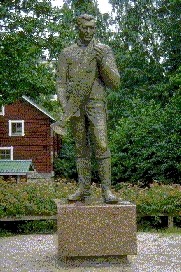
I suoi concittadini hanno eretto in sua memoria un monumento, per questo uomo che con il suo ingegno e la sua operosità ha portato tanto benessere ad una intera regione.
In this week I tried to present Finland through a large photo gallery .. I hope I have aroused in you the desire of Finland or the right nostalgia to come back to it
If so, it will be .. have a good trip!
Look all the posts on my Instagram profile HERE
In questa settimana ho cercato di presentare attraverso una nutrita galleria fotografica la Finlandia .. spero di aver suscitato in voi la voglia di Finlandia o la nostalgia giusta per tornarci.
Se così sarà .. buon viaggio!
Guardate tutti i post sul mio profilo Instagram QUI
Finland, the country of a thousand lakes can be considered the largest national park in the world. In the country at the top of the world, surrounded by a disruptive nature you will have the opportunity to live an unforgettable holiday, driving in the car side by side with the reindeers that move free on the territory or stopping to admire the incredible spectacle of nature that is the midnight sun Then in the winter months, in an atmosphere of absolute peace there is a crystalline air. But Finland is not just nature, it is also culture and tradition, just think of Lapland that will welcome you with its immense spaces and its Sami people, dressed in the characteristic colorful costumes. And then do not forget that in the heart of Lapland right on the Arctic Circle Santa Claus lives, waiting for you in his highly efficient village of Rovaniemi. It is a country to be seen and enjoyed especially in the summer, but the Finnish winter has a very special charm that manages to amaze you.
Vi siete mai chiesti come nasca un Rapala, termine con cui è comunemente indicata l’esca artificiale più conosciuta nel mondo; credeteci, se vi capiterà di andare in Finlandia non lasciatevi scappare l’opportunità di visitare la fabbrica in cui vengono costruiti questi autentici gioielli super perfetti. La fabbrica Rapala si trova a VAAKSY, un piccolo paesino situato nel comune di ASIKKALA a circa 150 km da Helsinki; viaggiando in macchina lungo la superstrada per Lathi occorrono circa due ore per arrivarvi dalla capitale.
La fabbrica di Vaaksy è nata nel 1949 fondata da Lauri Rapala l’inventore del Rapala ( clicca sul nome per leggere la sua storia ); l’azienda nel corso degli anni è sempre stata guidata dalla stessa famiglia, per cui l’ingegno del capostipite Lauri non è andato perso ma anzi si è tramandato di padre in figlio.
Nella fabbrica trovano lavoro circa 350 operai di cui ben 300 sono donne, e questa massiccia presenza di mano d’opera femminile è dovuta al fatto che la costruzione delle esche comporta un lavoro minuzioso, fatto di abilità manuale, precisione e molta pazienza, insomma un insieme di caratteristiche che più facilmente sono reperibili nella donna.
La stragrande maggioranza degli abitanti della zona lavorano alla Rapala e di questa opportunità loro concessa, gli operai sono riconoscenti alla famiglia Rapala ed in particolar modo al vecchio Lauri al quale è stato eretto in segno di riconoscenza un monumento in un piccolo parco del paesino.
Annualmente escono dalla fabbrica quasi dieci milioni di pezzi, mentre ogni anno vengono immessi sul mercato due nuovi modelli che vanno ad arricchire il catalago che conta più di 600 modelli diversi.
La visita guidata alla fabbrica inizia da una piccola casetta in legno dove sono messi in bella mostra gli attrezzi artigianali con cui Lauri Rapala costruì negli anni trenta i primi rudimentali pesciolini in legno; tra i vari attrezzi spicca un vecchio filatoio a mano arricchito da una striscia di carta vetrata applicata intorno alla ruota più picccola, con questo attrezzo Lauri rifiniva e levigava ogni singolo pezzo.
Poco lontano accanto ai quadri contenenti i modelli più famosi e quindi più richiesti nel corso degli anni troviamo in una piccola tecla, perfettamente conservato ” il primo Rapala ” costruito da Lauri nel lontano 1936.
Il solo pensiero che questo modello sia stato costruito dalle mani di quel giovane boscaiolo-pescatore quasi sessant’anni fa ci permette di capire di quale ingegno possa essere stato dotato quest’uomo che imparò a scrivere e leggere correttamente grazie alla propria moglie che gli impartiva amorevoli lezioni durante le lunghe e gelide serate dell’inverno finlandese.
Il giro della fabbrica continua con la visione delle varie fasi lavorative necessarie per la realizzazione di ogni singolo pezzo finito.
Mediamente sono circa venticinque i passaggi lavorativi necessari per ottenere un prodotto finito, a cui si assommano nei diversi stadi del procedimento di produzione qualcosa come dieci controlli molto severi, che non vengono effettuati occasionalmente ma al contrario sono tutti programmati nei tempi e nei modi previsti dai ritmi della produzione.
Il corpo dell’esca è in legno di balsa, molto leggero ma al tempo stesso compatto e solido; la produzione dei corpi si ottiene facendo passare dei listelli di legno all’interno di apposite macchine tornitrici che modellano i corpi in varie forme e dimensioni, i listelli di legno di balsa vengono acquistati in notevoli quantità in Ecquador.
L’anima metallica dell’esca il cosidetto “scheletro” è formato da una armatura di acciaio inossidabile che comprende i tre attacchi nasale, ventrale e caudale per le ancorette e l’attacco di congiunzione fra i due settori nei modelli snodati.
Lo scheletro contiene poi nella sua parte anteriore una zavorra di piombo che viene dimensionata e posizionata in maniera diversa a seconda delle caratteristiche peculiari di ogni singolo modello.
La paletta che viene fissata saldamente al corpo è di plastica ad alta resistenza nei modelli normali, mentre nel modello Magnum è in metallo.
Le ancorette sono decisamente robuste e munite di punte estremamente accuminate; il fissaggio delle ancorette agli anelli caudali e ventrali viene realizzato mediante dei particolari moschettoni anulari a scorrimento circolare che consentono all’esca una notevole libertà di movimento in acqua.
Quindi ricapitolando, una volta che si è ottenuto l’artificiale grezzo dai listelli di legno di balsa lo stesso viene fatto passare alle varie fasi della lavorazione che prevedono l’inserimento dello scheletro, la piombatura, l’attacco delle ancorette e della paletta, la colorazione e lo strato di vernice protettiva.
Vale la pena di ricordare che nella fase di colorazione dell’esca, gli occhi di ogni singolo artificiale vengono realizzati a mano dalle operaie con un pennellino; le vernici ed i materiali utilizzati per la colorazione dei vari modelli e in particolar modo lo strato di vernice protettiva che viene applicato per ultimo sono di altissima qualità e soprattutto sono quanto di meglio l’industria chimica può offrire per garantire una perfetta conservazione dei colori nelle peggiori condizioni ambientali.
A lavorazione ultimata l’esca prima di poter passare al reparto confezionatura deve passare indenne le prove in vasca; questa fase della produzione è quella in cui si evidenzia in modo incredibile il perfezionismo della Rapala, pensate che ogni singolo pezzo viene provato in acqua in apposite vasche per testarne la navigabilità.
Esistono due tipi di vasche, quelle normali a forma di tunnel e quelle circolari in cui viene simulato il lavoro che deve fare l’artificiale quando si trova in corrente; l’esca per essere testata viene attaccata ad una piccola cannetta manovrata da un collaudatore.
Sono 40 i collaudatori che dotati di una elevata esperienza sono in grado di notare la pur minima anomalia nel comportamento dell’esca in acqua; in questa fase il collaudatore può intervenire sull’artificiale con apposite regolazioni che lo portino a nuotare in acqua secondo dei canoni predeterminati ed inderogabili.
In pratica questa procedura di collaudo serve a far sì che tutti i modelli di una serie si comportino in acqua nella stessa maniera; le esche che nonostante le regolazioni del collaudatore continuano a muoversi in maniera difforme allo standard prestabilito vengono scartate.
A questo punto l’artificiale testato viene inserito in appositi contenitori ed avviato al reparto confezionatura, dove una volta inserito nella caratteristica scatola box sarà pronto per essere commercializzato assieme agli altri 49.999 pezzi prodotti in ogni singola giornata lavorativa.
Jalmari Jyllänketo, ispettore capo dei servizi segreti finlandesi, è inviato nel cuore della Lapponia con una missione speciale: scoprire cosa si nasconde dietro la Palude delle Renne, un vecchio kolchoz ora trasformato in una fiorente azienda agricola biologica. Corre voce che la proprietaria Ilona Kärmeskallio, eroica paladina dell’ecosostenibile, abbia ucciso il marito con le proprie mani e commesso le peggiori atrocità. Vestiti i panni di ispettore bio, l’agente segreto s’infiltra con piacere in questo paradiso salutista, che con funamboliche tecniche agrarie ricava dalla terra artica le migliori erbe aromatiche d’Europa e dove perfino la vecchia miniera di ferro scavata nelle viscere della montagna è stata convertita in un’avanguardistica fungaia. Non c’è che dire, la Palude delle Renne merita il più esclusivo bollino bio. Ma proprio nella fungaia c’è qualcosa che non torna: perché è sormontata da una torretta di guardia, avvolta da un silenzio spettrale e chiusa da un portone di acciaio? Da dove vengono le urla che Jalmari ha sentito nel suo labirinto di gallerie sotterranee? E cosa ci fanno a zappare la terra del kolchoz un noto parlamentare, un teppista nazi e il vescovo Röpelinen? Con la sua fantasia senza confini e il suo humour senza filtri, Arto Paasilinna torna a puntare la lente sulle più scomode domande aperte della società. E in un provocatorio viaggio dall’eco-paradiso agli inferi, dimostra a proprio modo, politicamente scorretto, come sostenere la bioagricoltura risolvendo l’eterno problema dei delitti e delle pene.
La fattoria dei malfattori(Hirttämättömien lurjusten yrttitarha) è uno dei tanti romanzi dello scrittore finlandese Arto Paasilinna.
Scritto nel 1998 è stato pubblicato in Italia dalla casa editrice Iperborea nel 2013.
Sono stato in Finlandia per la prima volta nel 1992 e posso dire avendola girata in lungo e in largo di conoscerla discretamente bene; ne ho ammirato la sua bellezza attraverso città e villaggi meravigliosi, fiumi impetuosi, una miriade di laghi, montagne da urlo e foreste, foreste, e poi ancora foreste che ti accompagnano e avvolgono mentre ci si spinge verso Nord e oltre il Circolo Polare Artico.
Mi ricordo la sensazione di monotonia che ho avuto nei primi due giorni di contatto con una natura così predominante, poi con il passare dei giorni osservando come vivessero quella condizione gli abitanti di villaggi distanti decine di chilometri gli uni dagli altri ho capito che una natura così avvolgente e a prima vista ostile la si può percepire solo ed unicamente come amica nel momento in cui si realizza che è parte integrante del proprio dna.
Sono ritornato in Finlandia mediamente ogni due anni e nel frattempo la lettura dei romanzi di Arto Paasilinna è stata fondamentale per poter meglio comprendere la quotidianità e la cultura di fondo dei finlandesi e per apprezzare sempre più un paesaggio ( penso ad esempio a quello della penisola di Koli) che molti ritengono affascinante giusto lo spazio di qualche minuto, ma dal quale non vedono l’ora di scappare per rituffarsi nel caos della loro “civiltà”.
Venendo al libro, Arto Pasillina è uno scrittore capace di non deludere mai!
Ha uno stile inconfondibile, una sorta di black humour di matrice britannica con il quale spinge il lettore alla riflessione sui grandi temi della vita e della nostra società, e poi che dire dei suoi personaggi sempre pronti con la dovuta tranquillità ad adattarsi alle situazioni più inusuali.
Con questo romanzo Arto ritorna sui livelli medio alti delle sue opere più riuscite ( penso a: Il Mugnaio urlante, L’anno della lepre e Il Miglior amico dell’orso).
Bella l’idea dell’ispettore di polizia che per svolgere le sue indagini si “traveste” da ispettore bio per tuffarsi in una serie di verifiche ufficiali in un’azienda agricola biologica nel cuore della Lapponia, pur sapendo quasi nulla di coltivazioni biologiche, concimi naturali e quant’altro attenga alla sfera delle coltivazioni biologiche.
Un romanzo piacevole, in cui scopriremo ciò che davvero nasconde quella fattoria, intuibile sin dal titolo.
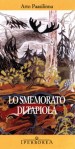
Segnalo dello stesso autore: L’anno della lepre (ed. orig. Jäniksen vuosi, 1975, trad.1994) Il bosco delle volpi (ed. orig. Hirtettyjen kettujen metsä, 1983, trad.1996) Il mugnaio urlante (ed. orig. Ulvova mylläri, 1981, trad.1997) Il figlio del dio del tuono (ed. orig. Ukkosenjumalan poika, 1984, trad.1998) Lo smemorato di Tapiola (ed. orig. Elämä lyhyt, Rytkönen pitkä, 1991, trad.2001) I veleni della dolce Linnea (ed. orig. Suloinen myrkynkeittäjä, 1988, trad.2003) Piccoli suicidi tra amici (ed. orig. Hurmaava joukkoitsemurha, 1990, trad.2006) Il migliore amico dell’orso (ed. orig. Rovasti Huuskosen petomainen miespalvelija, 1995, trad.2008) Prigionieri del paradiso (ed. orig. Paratiisisaaren vangit, 1974, trad.2009) L’allegra apocalisse (ed. orig. Maailman paras kylä, 1992, trad.2010) Le 10 donne del cavaliere (ed. orig. Kymmenen riivinrautaa, 2001, trad.2011)
Arto Tapio Paasilinna Arto Tapio Paasilinna è nato il 20 aprile del 1942 a Kittilä in Lapponia.
È uno degli scrittori finlandesi più conosciuti all’estero, dal momento che parte della sua produzione è stata tradotta in 45 lingue.
Ha un passato da giornalista, poeta e guardiaboschi; autore di culto in Finlandia (dove ogni suo libro supera sempre le 100.000 copie), è molto amato anche all’estero per il travolgente humour e la capacità di raccontare ridendo anche le storie più tragiche.
Ha al suo attivo più di 30 romanzi, oltre a pièces teatrali e sceneggiature, ed è uno dei pochi scrittori finlandesi che vive unicamente della sua penna.
Nel 1994 gli è stato conferito in Italia ilPremio Acerbi per “L’anno della lepre”, romanzo che ha superato le 120.000 copie in Italia e dal quale sono stati prodotti due film.
Vive alternando alla Lapponia e a Helsinki le sue sempre più frequenti tappe nei paesi più assolati del Sud, spesso anche in Italia.
I suoi libri generalmente riflettono la vita comune finlandese, e lasciano trasparire anche la difesa dell’ambiente e della vita naturale.
In Finlandia alcuni suoi romanzi sono stati trasformati in opere cinematografiche e televisive: “L’anno della lepre”, “Il mugnaio urlante” e “Lo smemorato di Tapiola”, mentre “Piccoli suicidi tra amici” è stato girato in versione più lunga per essere trasmesso come mini-serie televisiva. “I veleni della dolce Linnea”, al contrario, è stato portato direttamente sul piccolo schermo.
Nell’ottobre del 2009Paasilinna è stato ricoverato per un ictus e la conseguente emorragia cerebrale; dopo un lungo ricovero, lo scrittore è tornato a parlare e a camminare, ma la sua carriera artistica pare irrimediabilmente compromessa.
I suoi romanzi in Italia sono pubblicati dalla casa editrice Iperborea.
La Finlandia è considerata a ragione “ il paradiso dei pescatori” in quanto in questo Paese, dove la natura è rimasta ancora incontaminata, sono tali e tante le possibilità di scelta che si presentano a chi ama praticare la pesca sportiva che a volte può essere imbarazzante il dover scegliere la zona per la propria battuta, vista la bontà e validità dei molteplici luoghi di pesca.
Certamente tutto questo è dovuto alla particolare conformazione di questo Paese che presenta sul suo territorio un numero incredibile di laghi ( sono infatti oltre 180.000 ) e una miriade di fiumi, oltre ad avere più di 4.000 km di coste marine.
In più cosa assai importante la pesca sportiva, può essere praticata durante tutto l’anno, in quanto anche nel periodo invernale si può tranquillamente pescare attraverso un buco che viene praticato sulla superficie ghiacciata dei laghi o del mare.
Lo scopo di questa guida è quello di fornire tutta una serie di notizie utili a chi ama la pesca, per poterla praticare nel modo migliore in questo Paese, fornendo al tempo stesso alcuni itinerari di pesca che toccano quei luoghi di pesca che meritano di essere assolutamente provati.
Buon viaggio e buon divertimento!
un giornalista in viaggio che non sopporta gli ombrelli
 Kaisa Sirén lives in Rovaniemi, within the Arctic Circle of Finnish Lapland, where she works as a freelance photographer and artist.

 Kaisa Sirén e l’arte di rendere visibile l’invisibile







 Paula Mikkilä

 Milla Piirainen

 Taru Rouhiainen



 Saila Seppo






 While
While


 Ulla Väisänen from Finland between dream and reality!


 In
In




 MAJ SJÖ from Finland comes with a breeze of positivity






 giuseppe genta blog