
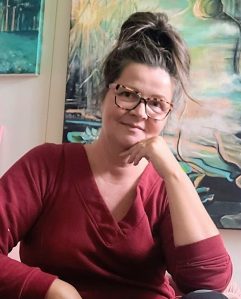
 Today I am pleased to introduce you to Finnish artist Anne Saarinen, originally from central Finland where she still lives in Jyväskylä, a city of 150,000 located north of the beautiful Lake Päijänne.
Anne, a painter and art teacher, studied art education at the University of Jyväskylä and has worked as an art teacher for over twenty years.
Her art studio is located in Kuhankoski, at Laukaa Art Studios, in the main building of a former girls’ school built in 1927 in the Jugend style , on the shores of Lake Kuhajärvi.
The studio’s unique location, in a quiet rural setting, allows for intense creative work.
Anne also spends a lot of time at her vacation home in the Sabina region, in the mountains of central Italy, where she draws inspiration from the light, intense colors, and palpable layers of history, from ancient Rome to medieval monastic life.
In this context, where nature becomes a concrete model and metaphor for her paintings, where plants and landscapes embody memories, experiences, and cultural meanings, Anne manages to reinterpret everything around her through painting.
This results in works in which reality, history, and imagination intertwine in artworks with a vegetal and divine theme.
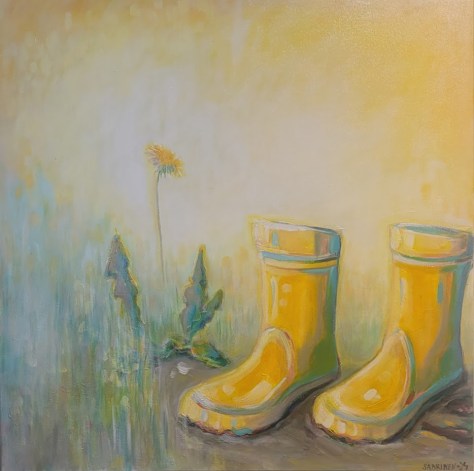
Anne is deeply fascinated by the aesthetics and value of everyday plants, which we often overlook.
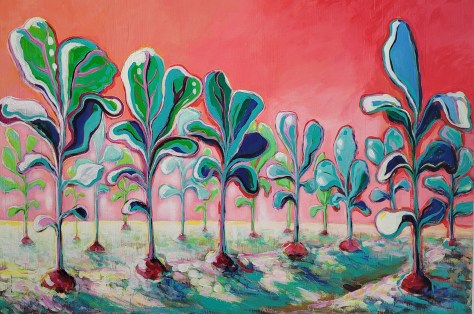
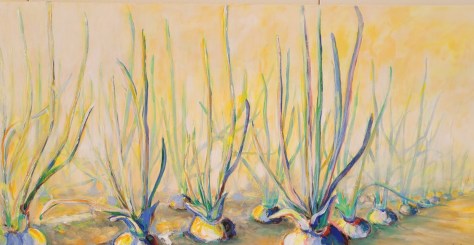
The beauty of everydays plants is often overshadowed by that of flowers, and in her body of work, Anne explored the aesthetics, texture, color, and contrast of a useful garden.
Her goal was to capture the impression created by sunlight on a bright summer day, pursuing naturalism, but rather expression and maximal colorism, based on the creation of intuitive and physical signs and the interplay of contrasts and colors.
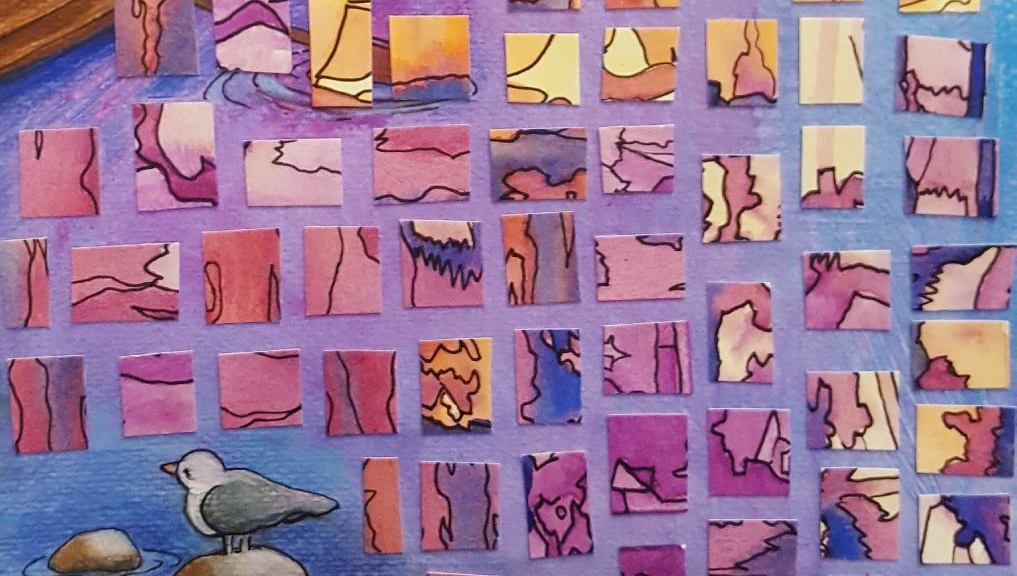
On canvas, she presents them with vibrant colors, often supported by structure and repetition, such as the rows of vegetables in a vegetable garden.
For Anne, in her work, plants represent resilience and a strength that brings joy to the viewer.
Exploring the relationship between women and gardening, a social theme emerges: the appreciation of femininity, where the cultivated plant becomes a symbol of tenacious women, often taken for granted throughout history, yet there is a universal and silent strength within women, present for centuries.
Another dear theme to Anne is that of the goddesses of the past.
Through her works, she seeks to create a mental landscape born from the encounter between Finland and the goddesses of the past.
Through this connection, a universal landscape is created, where divinity can be present anywhere, on the shore of a lake or in the forest, drawing inspiration from layers of myth, folklore, and archaic imagery, but also from ancient narratives that still resonate today.
Her beautiful Northern Goddesses are the three Roman goddesses Diana, Feronia, and Aurora, whom she depicts as fused with Finnish nature.
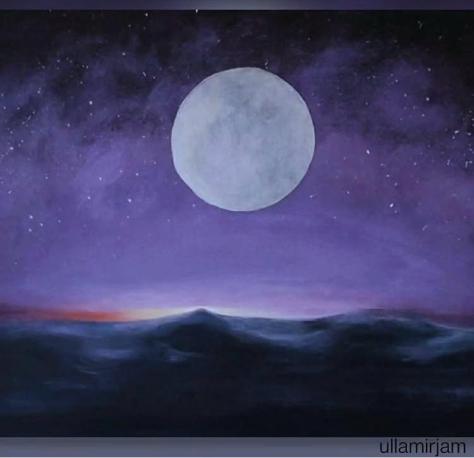
These goddesses symbolize important things in her works, aiming to describe the landscape of the soul, which is created in the mind when reality encounters a sense of universal connection, regardless of time and place.
Painting for Anne can be both a personal and a political act.
Through plants, she wishes to express the strength that often goes unnoticed in the frenzy of everyday life, while through figures of divinities, she seeks connections between cultures and their universal narratives.
Her works, upon closer inspection, combine direct observation of nature, historical narrative, and an experiential and personal perspective.
Anne follows a physical yet intuitive working process, painting with both acrylics and oils.
Her paintings take shape quickly with large, rough brushes that create a powerful line.
Painting in Italy, Anne noticed her palette becoming brighter, while in Finland the tones she uses are softer and more muted.
Her working process is based on a dialogue between truth and expression, colors, shapes, and subjects, which translates into an expressive result.
For Anne, Italy is not only a constant source of inspiration, but its light, colors, and cultural layers open up new perspectives for her artistic expression.
The nature and history of both Italy and Finland are intertwined in her paintings.
Anne feels that Italy has strongly influenced her visual thinking, and her art resonates particularly well in the Italian context.
She therefore hopes to present her work in Italy in the future.
For more information, to purchase her work, or to collaborate, please contact her at:
Website and online shop: annesaarinen.fi
Instagram: @annesaarinenart
WhatsApp: +358407417140
 Anne Saarinen e il suo viaggio tra Italia e Finlandia attraverso piante utili e Dee Boreali
Oggi sono lieto di presentarvi l’artista finlandese Anne Saarinen, originaria della Finlandia centrale dove tuttora vive a Jyväskylä, una città di 150.000 abitanti situata a nord del meraviglioso lago Päijänne.
Anne, pittrice e insegnante d’arte ha studiato educazione artistica all’Università di Jyväskylä e ha lavorato come insegnante d’arte per oltre vent’anni.
Il suo studio d’arte si trova a Kuhankoski, nei Laukaa Art Studios, nell’edificio principale di un’ex scuola femminile costruita nel 1927 in stile Jugend, sulle rive del lago Kuhajärvi.
La particolare posizione dello studio, in un tranquillo ambiente rurale, consente un intenso lavoro creativo.
Anne trascorre molto tempo anche nella sua casa per le vacanze nella regione della Sabina, tra le montagne dell’Italia centrale e in questi luoghi trae ispirazione dalla luce, dai colori intensi e dagli strati palpabili della storia, dall’antica Roma alla vita monastica medievale.
In questo contesto dove la natura diventa modello concreto e metafora per i suoi dipinti, dove piante e paesaggi incarnano ricordi, esperienze e significati culturali, Anne riesce a reinterpretare tutto ciò che la circonda attraverso la pittura.
Nascono così opere in cui realtà, storia e immaginazione si intrecciano in opere d’arte a tema vegetale e divino.
Anne è molto affascinata dall’estetica e dal valore delle piante di uso quotidiano, che molto spesso trascuriamo.
La bellezza delle piante utili è spesso messa in ombra da quella dei fiori e Anne nel suo corpus di lavori, ha esplorato l’estetica, la struttura, il colore e il contrasto di un giardino utile.
Il suo obiettivo è stato quello di catturare l’impressione creata dalla luce del sole in una luminosa giornata estiva, con l’intenzione di perseguire il naturalismo, ma piuttosto l’espressione e il colorismo massimale, basati sulla creazione di segni intuitivi e fisici e sul gioco di contrasti e colori.
Su tela, le presenta con colori vivaci, spesso supportati da struttura e ripetizione, come ad esempio i filari di un orto.
Per Anne nel suo lavoro, le piante rappresentano la resilienza e una forza che porta gioia all’osservatore.
Esplorando poi il rapporto tra donne e giardinaggio, emerge un tema sociale: l’apprezzamento della femminilità, dove la pianta coltivata diventa simbolo della donna tenace, spesso data per scontata nel corso della storia, ma c’è una forza universale e silenziosa nelle donne, presente da secoli.
Altro tema molto caro per Anne è quello legato alle dee del passato dove attraverso le sue opere cerca di creare un paesaggio mentale che nasce dall’incontro tra la Finlandia e le dee del passato.
Attraverso questa connessione si viene a creare un paesaggio universale, dove la divinità può essere presente ovunque, sulla riva di un lago o nella foresta sulla base di una ispirazione che arriva da strati di mito, folklore e immaginario arcaico ma con un collegamento con antiche narrazioni che risuonano ancora oggi.
Le sue bellissime Dee Boreali sono le tre dee romane Diana,Feronia e Aurora che ha raffigurate come fuse in un tutt’uno con la natura finlandese.
Queste dee nelle sue opere simboleggiano cose importanti, con l’obiettivo di descrivere il paesaggio dell’anima, che si crea nella mente quando la realtà incontra un senso di connessione universale, indipendentemente dal tempo e dal luogo
Dipingere per Anne può essere sia un atto personale che politico.
Attraverso le piante, desidera parlare della forza che spesso passa inosservata nella frenesia della vita quotidiana, mentre attraverso figure di divinità, cerca legami tra le culture e le loro narrazioni universali.
Le sue opere a ben vedere combinano l’osservazione diretta della natura, la narrazione storica e una prospettiva esperienziale e personale.
Anne segue un processo di lavoro sia fisico che intuitivo e dipinge sia con acrilici che con oli.
I suoi dipinti prendono forma rapidamente con pennelli grandi e ruvidi che creano una linea potente.
Dipingendo in Italia, Anne ha notato che la sua tavolozza diventa più luminosa, mentre in Finlandia i toni che usa sono più morbidi e tenui.
Alla base del suo processo lavorativo si crea un dialogo tra verità ed espressione, colori, forme e soggetti, che si traduce in un risultato espressivo.
L’Italia per Anne non è solo una fonte costante di ispirazione, ma la sua luce, i suoi colori e le sue stratificazioni culturali aprono nuove prospettive per la sua espressione artistica.
La natura e la storia sia dell’Italia che della Finlandia sono intrecciate nei suoi dipinti.
Anne ha la sensazione che l’Italia abbia fortemente influenzato il suo pensiero visivo e la sua arte risuona in modo particolare nel contesto italiano, e quindi nutre la speranza di poter presentare in futuro le sue opere anche in Italia.
Per maggiori informazioni, acquisti delle sue opere o collaborazioni non esitate a contattarla attraverso:
Sito web e negozio online: annesaarinen.fi
Instagram: @annesaarinenart
WhatsApp: +358407417140
Exhibitions
La Fiaba, Eloa 2025, group exhibition
Peurunka, Mental Spa 2025, group exhibition
Konstrundan, Laukaa Art Studios 2024, group exhibition
Peurunka, John Smith Goes Art 2024, group exhibition
Arte Laguna, Venice – Deae Borealis 2024, virtual exhibition
Gallery Popper, Lannoitettu 2024, solo exhibition
Hoikkassali, Äänekoski 2017, solo exhibition







 giuseppe genta blog